Massive thanks to @BootWizardBootReviews for putting this together!
Yes, for all of you who thought I might have dropped off the edge of the earth, I have not, I still live, however family life has taken a bit of a toll on my ability to produce Boot Wizard videos (not complaining). However, that isn’t going to stop me from having a good ol’ fashioned opinion. Thank you to Andrew and the Lockhart Boot Blog for giving me a platform to vent a little.
The FIFA women’s world cup 2023 will kick off on the 20th of June, with co-hosts New Zealand taking on Norway followed by co-hosts Australia taking on the Republic of Ireland. My discussion begins with, should the Republic of Ireland be in the tournament at all?
The women’s world cup has existed since 1991 and started as a 12 team tournament, as the women’s game has grown, rightfully, so has the pool of teams, expanding to 16 teams in the USA in 1999 and again to 24 teams 8 years ago in Canada. Now for the first time ever we are looking at a 32 team tournament. With a larger pool of teams, is there is an argument to be made that the Irish, taking part in their first ever world cup finals, should not be there at all?

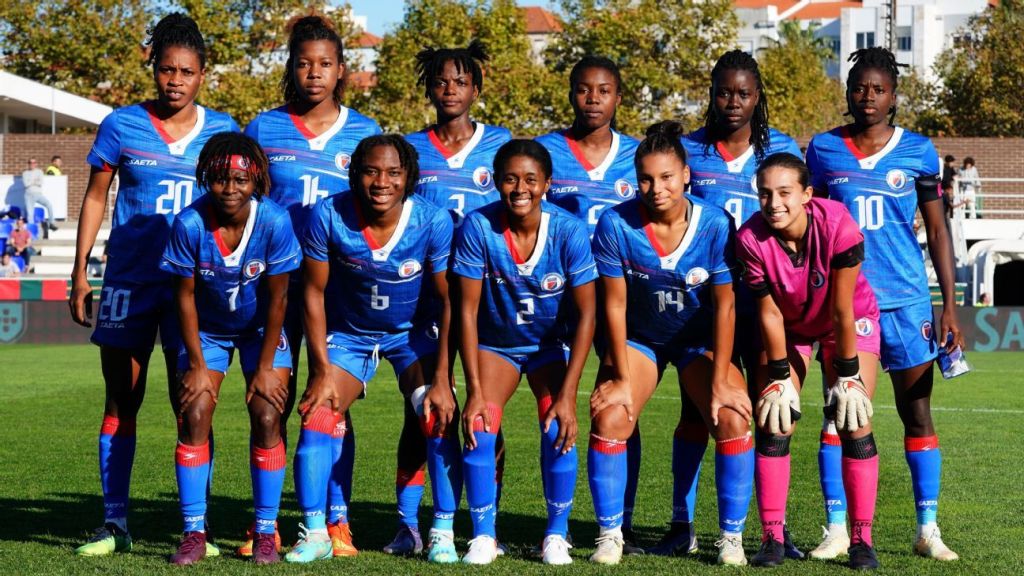
Of course I am not solely focused on my country of residence here and I am delighted to see the Irish women at the finals and I’m being very harsh picking on the Irish as they are ranked a very respectable 22nd in the world. However, the increase to 32 teams does mean an increase in countries ranked significantly further down the FIFA scale taking part. For example Jamaica and Thailand at 43 and 44 respectively, although both did appear in the 24 team tournament in 2019. More obvious are the inclusions of teams such as Haiti ranked 53rd and Zambia ranked 77th. Although, Haiti beat Mexico (35th) in their qualifying group and managed to secure a playoff victory against 2019 tournament attendees Chile (41st) to secure their spot in the tournament. So it seems there is no argument that the lower ranked FIFA teams should not have made it to a 32 team tournament, they have clearly all earned their spot on the field. If the issue doesn’t come from teams not earning their place on the field, then where does it come from? In my opinion it starts with the gulf in standard between the very top teams and those further down the rankings and where that gulf really comes from, money and the availability of it.
Money reigns supreme in professional sports these days, it keeps the top players and teams at the top and if you want to join the upper echelons of the elite you better have the funds to get there and then more funds to stay there. See the rise of Manchester City and Chelsea in the Premier League, the fact that Barcelona have been willing to gamble their future to ensure success now and keep the trophies, players and money coming in, there is a reason that Wrexham have managed to get out of the national league for the first time in over a decade and it’s not because of how charismatic Ryan Reynolds and Rob McElhenney are, it’s because of how deep their pockets are. Money buys success.

Nowhere are the financial and quality divides more obvious than in women’s football. The top club teams are almost all associated with rich or top organisations that bring in big revenue, Barcelona, Chelsea, Arsenal, Lyon, PSG and the teams that don’t have money or big backers really do struggle, the chances of an underdog winning in the women’s game is low, very low. Apply this same principle on an international level based on the ability of countries to provide funding to women’s football programmes and the disparity becomes even more stark.
The top 5 ranked teams in the world, USA, Germany, Sweden, England and France, even the previously formidable Brazil have found themselves slipping down the rankings of late. Affluent European nations make up 65% of the top 20 teams in the world, those not from Europe are Japan, Canada, Australia, China, Korea Republic & the USA, Almost exclusively countries with the ability to fund women’s programmes at a government level.

FIFA will say that they are addressing the imbalance by pushing the additional revenue from a 32 team tournament directly to players and also by increasing prize money. The prize pot for the 2023 world cup has been increased by 150% from 2019 and FIFA will be directly paying every single player who takes part a fee, something that players and unions have fought for. For the lower ranked teams that are most likely not going to progress beyond the group stage this is a fee of 30,000 USD while the players from the winning team will receive 270,000 USD with a sliding scale in-between. This has unfortunately brought with it a whole other section of issues where some football associations have taken the direct payments by FIFA as an excuse to completely drop player bonus payments making the move essentially mute. These aren’t small nations either we are talking the English and German FA’s. There’s no time to dissect that move here but it is worth noting. From a FIFA perspective I cannot criticise the move as it gives a larger portion of prize money directly to players who on average with their clubs earn just 14,000 USD per annum.
So, if a 32 team tournament allows FIFA to bring in more, here comes that buzz word again, revenue, and they then distribute more directly to players and by including more teams in the tournament they are providing money to more teams which in turn should bring an increase in standards. This all sounds positive, however, it doesn’t address how vast the aforementioned gulf in standards currently is and how that will impact this 32 team world cup. There is also the question, does increased revenue from a world cup appearance actually help at all?
In order to identify if the idea of giving teams exposure in a world cup and a one off financial boost makes a difference then we could look at some of the weaker teams from 2019 and see how they fare this year. In France in 2019 the undoubted strongest team in the competition in my view were the eventual winners the USA, they are also the best funded and compensated women’s national team. In 2019 the USWNT hammered the Thai team 13-0 in the group stages, the Thai’s conceded a further 7 goals in their other 2 group games losing all 3 games by an aggregate score of 20-1. That 1 goal being one of the most wholesome moments of the tournament as the entire Thailand squad celebrated it as if they had won the World Cup.

The best test could be to see how the Thai team perform this year, can they improve on that performance and show that a team with limited resources can really benefit from an appearance at the world cup even if they are not competitive. The problem being that Thailand were beaten by Cameroon in a playoff match and did not qualify for this world cup. Not a great start, especially considering there are 8 more places on offer. The two next worst performing teams from 2019, Jamaica and South Africa did both qualify again and due to the increased number of teams they do on paper have easier groups than they did in 2019 (although Jamaica’s still looks tricky). Keeping an eye on the progress of these 2 teams could be an indicator of progress between world cups and if just participating in the tournament and getting a financial boost really can make a difference. While we keep an eye on who might be the tournament winners and the surprise package we can also be keeping an eye on the health of the women’s game and FIFA’s strategy for it.
But wait, there’s more. We need to take a step back and think long term. The thing I think FIFA has absolutely failed to do here which leads me back to my question, should Ireland or some of the lowest ranked nations be taking part?
The women’s game is on the up, this is undeniable, the pace of increase is almost exponential, viewership figures are rising, sponsorship amounts are increasing, access is becoming easier. Sky Sports who practically single handedly brought about the current era of big bucks Premier League football has got involved in a 3 year 8 million pounds a year deal to show the WSL. The biggest broadcast deal of any women’s professional football league ever. Just because there is a boom at the top tier of women’s football this doesn’t mean that there has been a boom at all levels, or in some cases even a trickle-down effect. Going back to the WSL as an example, there are far too many games which are foregone conclusions, if you’re a betting person odds as short as 1/10 for favourites to win league games could be found last season, the same applies to International competition.

In order to qualify for the World Cup England (4th) in their last 6 qualifying games put 10 past Luxembourg (117th), 10 past North Macedonia (129th) a combined 30 over 2 games past Latvia (119th), 5 past Northern Ireland (45th) and a rather tame looking 1 goal past Austria (18th), all while conceding zero goals. My point being that these are not competitive games, Austria aside. One of the best things about the beautiful game is its unpredictability, how anybody can beat anybody else on any given day, the hope, the dreams, the drama. This is lacking from the women’s game in too many matches at the moment because the top teams are just too strong and the lower teams cannot compete, it’s too easy to not care about a match. This isn’t just damaging for the teams competing in these games it is damaging for women’s football as a whole, while it might sound like fun to watch your team stick 10 goals a game in, in reality it’s not when it happens regularly, it’s a bit, boring.
As the women’s game is growing and this upcoming world cup will undoubtedly draw the most viewers of any women’s international tournament ever, it is important that games and this tournament are exciting. One sided boring matches will cause viewers, especially new viewers to switch off which could be a disaster, these are viewers the game may never get back, potential viewers for domestic leagues next season that are not converted. Viewers who’s revenue will not be going into the women’s game, eyes who aren’t converted to statistics that are used to sell bigger advertising packages to increase, you guessed it, revenue. If these lower ranked teams have a complete inability to compete at this world cup and end up like Thailand from 2019 FIFA’s increased revenue for this World Cup will be for nothing and this will be proven to be a short sighted strategy proving that 32 teams is too much too soon. I hope I am wrong and this doesn’t happen.

 Lockhart Boot Blog