Half-baked
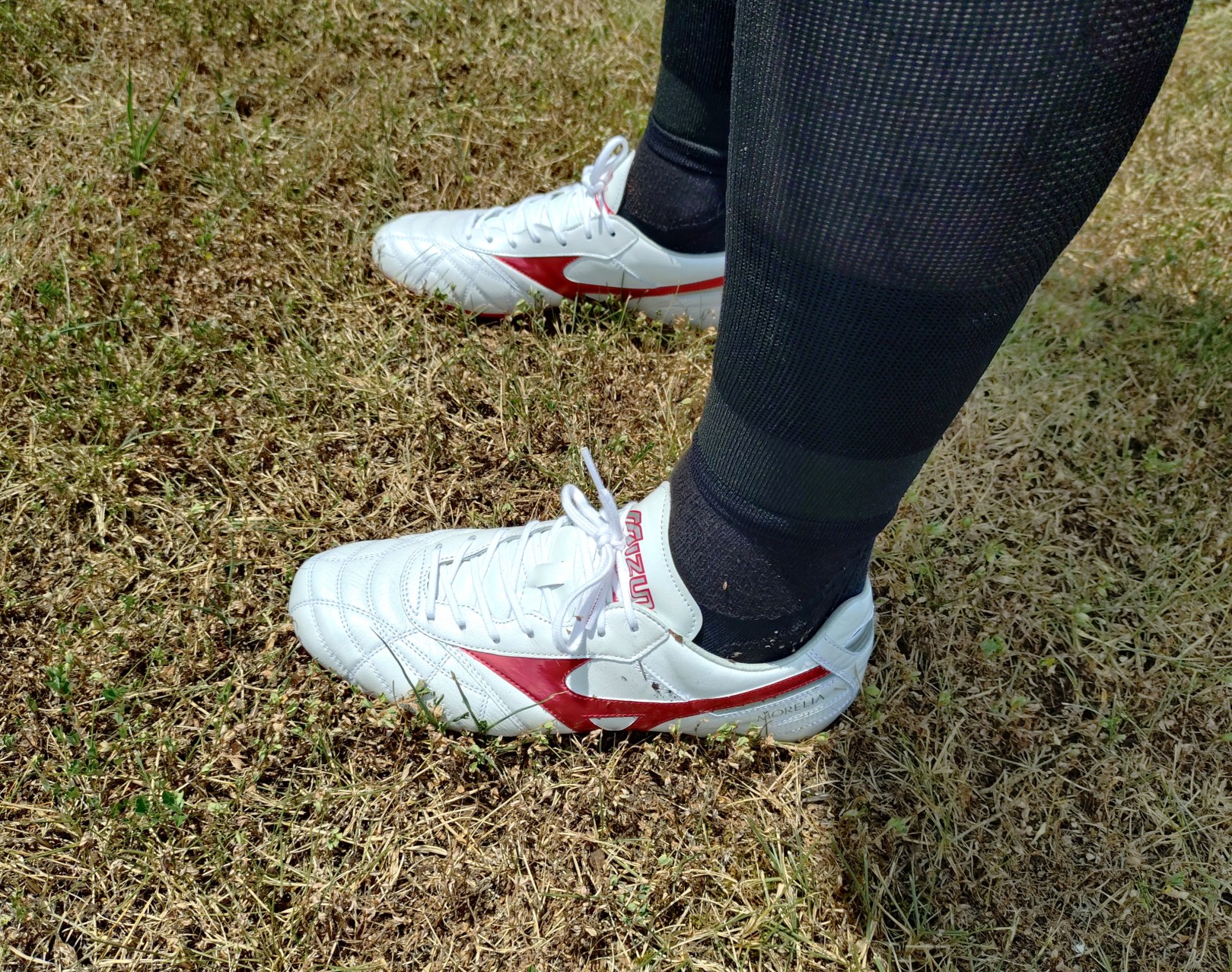
Mizuno has had a banger summer so far, not only releasing the brilliant Mizuno Morelia II Japan, but finally offering AG soleplates on a majority of their high-end boots. I gave a lot of praise to the Mizuno Morelia Proto but still felt it needed an FG plate, even though the AG plate is quite good. As part of increasing the range, Mizuno made some slight changes to the soleplate itself. They widened the heel studs to offer more stability as well as some supposed material changes. Mizuno have finally started offering the Morelia II Japan with an AG outsole for the first time since the only Morelia II TM (Turf Master). This was not a review I initially planned on doing, but I ended up doing a decent session (as well as a second run) in the boots, with much thanks from Indalo Boots for letting me try his pair. Go check out his Instagram.
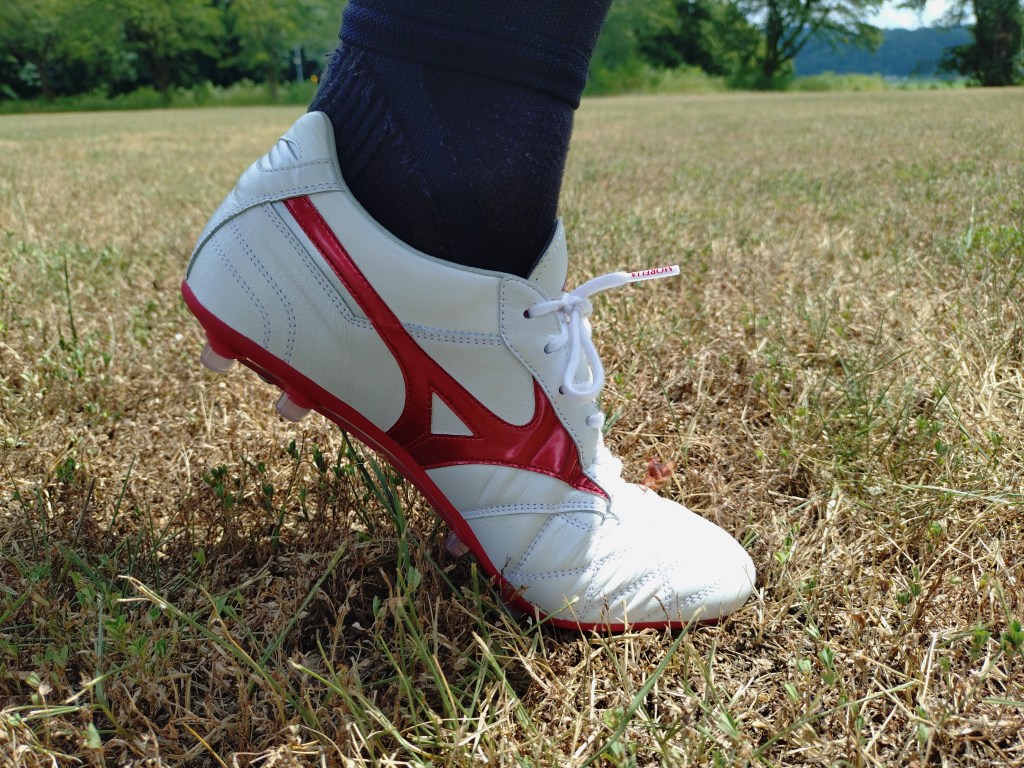
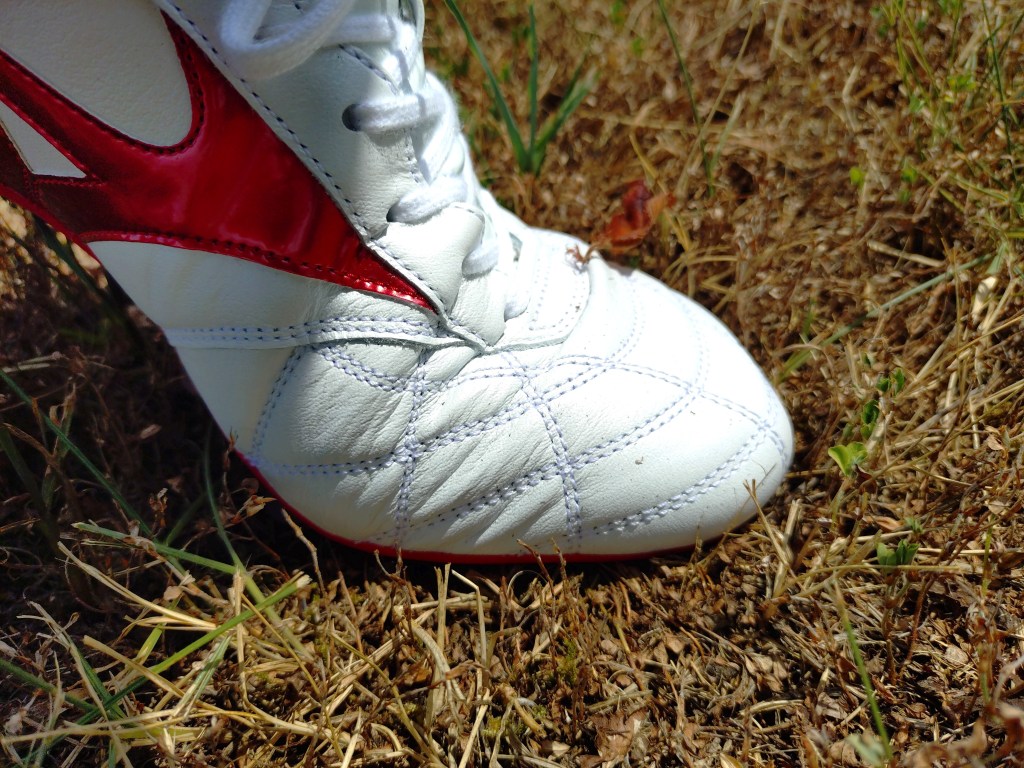
Anyways, things are great to start with. The new cross stich pattern is nice and is obviously based on the stitching on the Morelia Neo forefoot. For me, the stitching on this Morelia II Japan is better than the Neo because it just fits my forefoot better. While the forefoot is slightly wider, as well as being slightly thicker, it has an excellent touch on the ball and is enjoyable to manipulate the ball with. The pattern just works nicely, and I find it to be a bit more snug than the standard Morelia II layout, to the point that I think I prefer this new stitching pattern over the standard.
The heel is also nice and comfortable because of the suede lining the Morelia II Japan heels now have and the overall lockdown is pretty good as well because of the nice and dep lacing system. This means that the overall fit of the boot can be adjusted to fit a lot of different foot shapes. The laces still need to be of better quality, but that is an easy fix.
Just like the standard Morelia II Japan, the insole is decent in the Morelia II AG. It is not too thin but has enough padding to be a comfortable ride. Of course, a major reason why the boots are so comfortable is because it is an AG soleplate.

But we have been dancing around the issue for long enough. The AG soleplate is super flexible. More flexible than the one used on the Proto, more flexible than AG soleplates offered by other brands. While some people do like having a flexible soleplate, the soleplate here on the Morelia II Japan AG is way too flexible. The forefoot can be super flexible, fine. But the big issue is that the soleplate can even be bent in the middle of the heel, and it is not stable enough when making hard cuts and turns.
When I did my reel, I felt they were decent enough, but when inspecting the boots later while comparing them to my Morelia Proto, I realised how much more flexible the soleplate was on the Mizuno Morelia II Japan AG and that the quality did not even seem as nice.
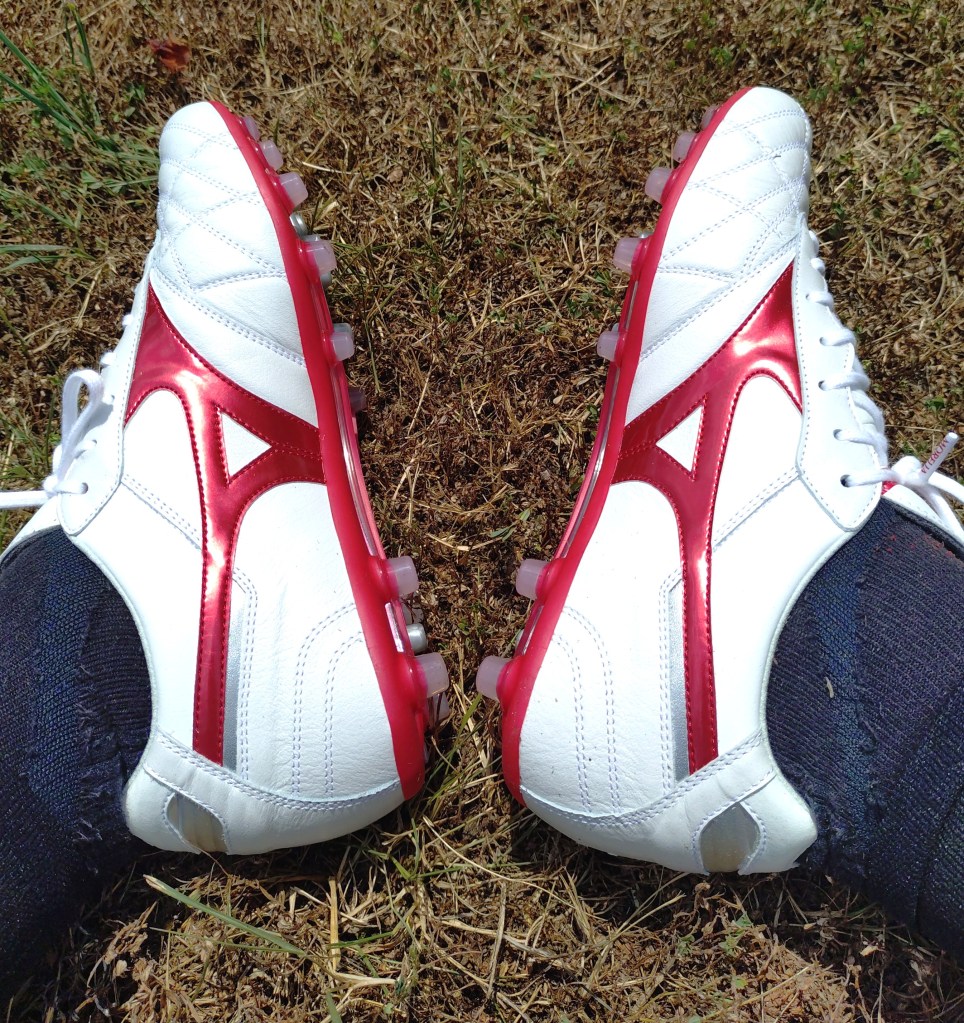
Another quick run in the grass has confirmed these issues. The soleplate is not good enough and I reckon that even swapping out the insole for a stiffer one cannot solve these issues. I did not even try the boots on AG, which normally does not have as much give as natural grass, and I felt the issues. It is frustrating because it seems like Mizuno did very little to add support to the midsole and has made a boot that has a high quality upper with a very low-quality soleplate.
It feels like Mizuno are trying to save money with this release and have not bothered to do enough (or any) testing to the boot as a whole before releasing it to the mass market. It is doubling frustrating because Mizuno as a whole has long been the standard bearer for quality but aside from the upper, the midsole and soleplate feel far below what I would expect from a Mizuno boot, especially a Made in Japan Mizuno boot.

The release of the Mizuno Morelia II Japan AG should have been a statement of intent to begin to finally address the issue some people have with wearing Mizuno boots on artificial grass. Instead, this release feels like a money grabbing move from Mizuno, wanting to cash in on the mass use of artificial pitches without doing any of the work that should come with making a good AG soleplate. It is unacceptable.
What do you think of the Mizuno Morelia II Japan AG? Please share this with your friends and make sure to follow me on Instagram!
Also make sure to check out the Football Boot Hour podcast that I co-host with Boot Wizard!
じゃあね!

 Lockhart Boot Blog
Awesome review as always, given that the soleplate on this feels inferior for a MIJ model than the normal one, would you recommend just getting the Mizuno II ELITE AG (Korea) over this Morelia II MIJ AG?
LikeLike
Probably, yeah
LikeLike
I just stumbled on your blog. Thank you for this very informative review, especially regarding the AG soleplate.
Are you sure that this boot had the widened studs in the back?
From what I can see online, the new AG soleplate with the widened heel studs have an external heel counter. The external heel counter is e.g. on the latest version of the neo beta ag and the cheaper monarcida ag. However, the latest realeses of the morelia ii ag, morelia neo iv pro ag and the morelia ii pro ag do not have an external heel counter, similar to the morelia ii ag reviewed by you. I therefore wonder whethet all these boots feature the widened heel studs. I would appreciate if you could shed some light on this.
Best regards
LikeLike
Thanks for reading!
Well, I compared it to the Proto and the studs are wider on the Morelia AG here.
LikeLike
thank you for the response and the confirmation that the studs are wider than on the proto. The wide studs are tgerefore not limited to the sole with the external heel counter. Best regards
LikeLike
You’re welcome
LikeLike
Great review as always, you are carrying football boot reviews!!
Why did the soleplate being so flexible make you not want to play on ag? Some consider turf football shoes the safest on ag and they are very flexible. It is more a performance issue or more an experience issue?
Thanks
Sen
LikeLike
Thanks for the kind words! Definitely not just me, though! Boot Wizard deserves a lot of credit too. Also, guys like Jezusftbl as well and even JayMike.
It’s not that it didn’t want me to use them on AG, it’s just that it’s so flexible that there is not a lot of support and my feet get strained trying to find that stability. The stud layout is great for AG, but an overly flexible soleplate means your feet have to do a lot more work. If you’re not ready or have trained your feet like that, it can become a big issue as your more likely to pick up injuries.
LikeLike
I see. Thanks for replying and keep up the good work!!
LikeLike
You’re welcome! Will do!
LikeLike
is the upper still the same as the fg model? Im not that fussed over the sole plate and train a lot barefoot anyway, but I mainly play on ag surfaces and am thinking about the uppers durability.
LikeLike
Yes, upper is the same as FG.
LikeLike