
My biggest miss
Puma have certainly been having a time of it over the past half decade or so. A lot of their boots have either been hit or miss, with a majority of them being misses. Couple that with the fact that they cannot seem to stop releasing colourways, almost as if someone is forcing them to do so, and Puma seems to have completely lost their way. It seems like another brand will overtake their place in the Big 3 soon (if this has not already subconsciously happened). Even their own leather replacement synthetic, K Better, has been a bust. And yet, Puma’s Japan design team seems to have taken that maligned material and produced something excellent. The Puma King Mirai Ultimate II did not make much of an impact when it released last year. I hardly took notice of it until a certain someone told me to take a look at it again. I am happy I did because the King Mirai is quietly an excellent boot.
Fit and Feel

Perhaps the biggest surprise when getting the King Mirai in hand is how nice the K Better is. With almost every other K Better boot that Puma has made, it is slightly leather like but takes a while to break in and it ranks towards the bottom of synthetic leather like materials. But on the King Mirai, it feels like a proper leather. Maybe not a kangaroo leather, but you certainly could convince someone it is a high-end leather of some sort. It is plush in hand and on feet, and the double stitching across the forefoot mimics the stitching on a leather boot.
The overall fit is really good. As expected of a boot designed in Japan, it has a floating tongue, deep lacing system and plenty of adjustability in the upper than allows the boot to fit a large variety of foot shapes. I also appreciate that instead of limiting the K Better to the forefoot, it runs up the midfoot as well. This means that there is a large area with which to control the ball but also means that there is no weird pressure on the arch that can happen with some boots.

On the medial side, you have Puma’s PWRCage tech. It is a neat addition to the boot that stops the foot from rolling over the side when making hard cuts. It is obvious that it took some work to make it work on the boot as there is a weird bulge where the PWRCage covers the heel area. However, I do not notice any fit issues while playing.
Another benefit of the PWRCage is that it helps with the lockdown, which is good. Again, any boot with a deep lacing not only means there is plenty of adjustability, but also lots of lacing to cinch the boot closer to the foot. And again, like many Japan designed boots, it has an extra lacehole for a runner’s knot so you can get extra lockdown in the heel. I am still baffled by how many brands still do not do this. It is a simple and cheap addition that helps improve fit and performance. Also, there is some nice cushioning running the middle of the tongue that stops there from being any lace bite.

Perhaps unsurprisingly because of the softness of the K Better upper used on the Mirai, the break in period is very quick, with the boots feeling ready to go after one 30-odd minute session. There is however some adjustment time needed to get used to the stiffer PWRCage material, but this is more a personal thing rather than something everyone might experience. It is very reminiscent of the feeling of the Puma One 18.1, so if you miss those boots, you might like the King Mirai.
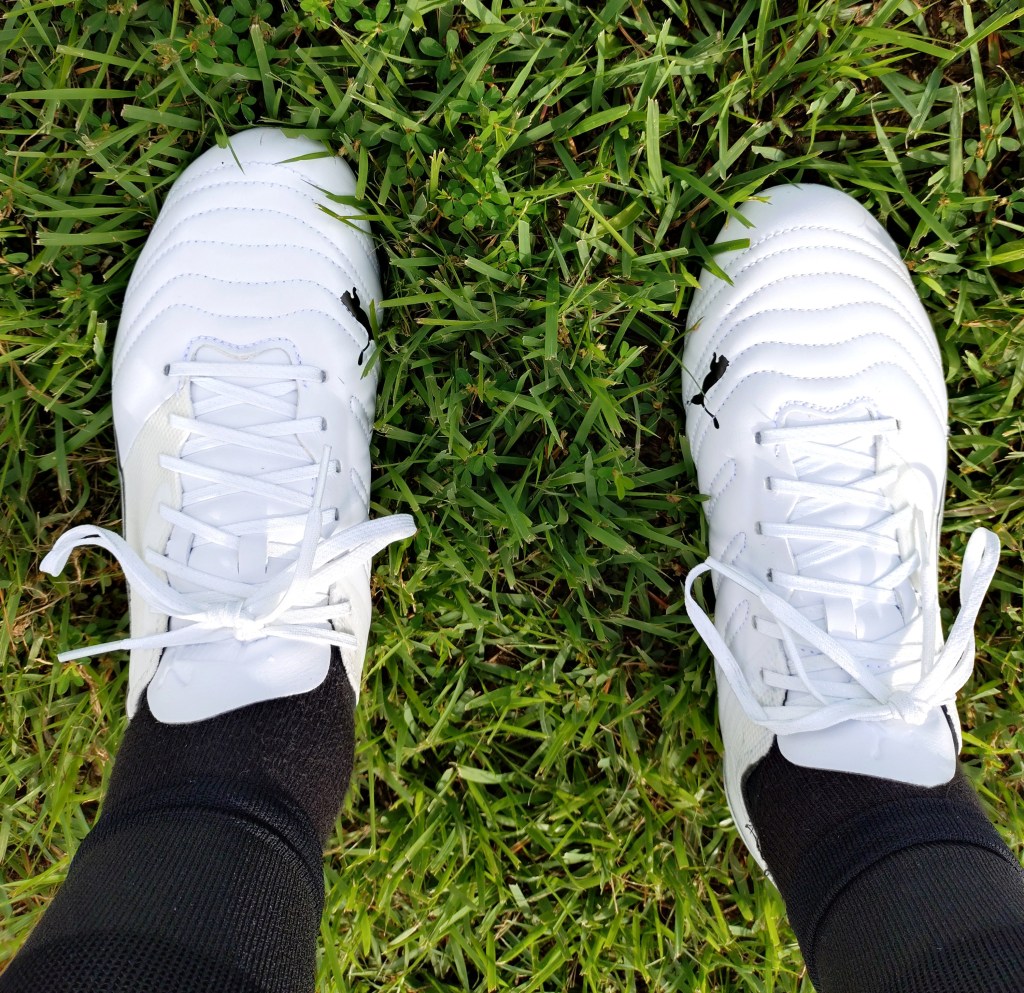
There is one issue I have with the boot which many of you could predict. The heel. It is not bad in terms of the shape, but the majority of the cushioning is towards the bottom and could have been much better if Puma decided to make the heel closer to a stitch and turn type heel. As it is, the top part of the heel has almost no cushioning. It is a bit jarring as the rest of the boot is softer. This is not to say the heel ruins the whole boot, but rather it could be better.
For sizing, I went half a size down from my normal size and found the fit to be almost dead on how I like a boot to fit. In the King Mirai this means I went with a 26cm/8 US/7 UK/EU 40.5. My recommendation is to half a size down unless you have super wide feet.
On The Ball

The K Better is so soft and plush feeling on the King Mirai that it should be no surprise that the touch on the ball is excellent. The upper is not overly bulbous, and feels closer to modern leather boot, somewhat like the adidas Icon II. However, because the K Better extends through the midfoot and towards the heel, there is more of a soft feel here than the Icon II (though I personally still prefer the Icon II).
Having that soft midfoot means that controlling the ball feels natural. It makes you forget that you are wearing a synthetic boot and because of that the touch feels soft and effortless. It also means that I definitely messed up by not reviewing these when they released because they are exactly the kind of leather-like boot that I prefer. Just enough tech to make the boots perform well, but not so much that I feel divorced from the touch on the ball.
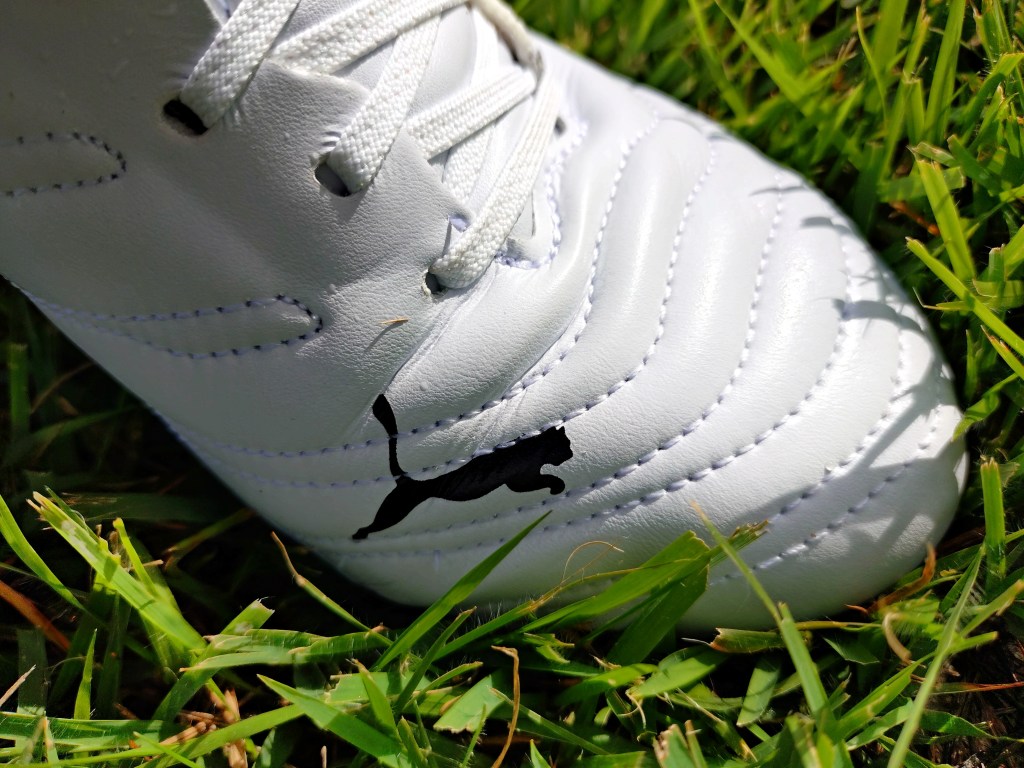
Like a natural leather boot, there are no surprises when dribbling with the ball at speed. Just a nice, clean touch with a bit of cushioning the feel a slightly plush, but natural feeling. Of course, this also means that hitting the ball with power is uncomplicated. Given how stiff a lot of synthetic leathers are these days, I appreciate the work that went into the Puma King Mirai Ultimate II to make it feel more natural and uncomplicated when manipulating the ball.
There is a very slight bit of grippy feeling to the K Better upper, but I do not feel it is much different than a treated leather upper. So, again, something I would expect to find from a normal modern leather boot.

Of course, being me, I have to bring up the fact that there is some nice texturing on the studs themselves which makes it easier to control and roll the ball around with the bottom of my foot. A small detail, but as readers of this blog will know, an important one for me.
Grip

Puma has been using the same hard ground soleplate for a while now. It would be nice to see it updated slightly, but it is hard to argue when it performs so well. There is a good amount of grip on multiple surfaces, and it is a good option for AG as well. I also appreciate how uncomplicated it is.
Personally, I wish this soleplate would make it onto Puma’s international releases as I think many people overseas would appreciate this soleplate on boots like the Future, for example.

Another thing I like about the soleplate on the King Mirai is that it has good number of studs to evenly distribute pressure from the bottom of the foot. This means that it is comfortable to run in on multiple surfaces. There is also a nice amount of stiffness through the midfoot. There is not much springback but the soleplate does a good job of not allowing the foot to twist in weird directions.
Conclusion
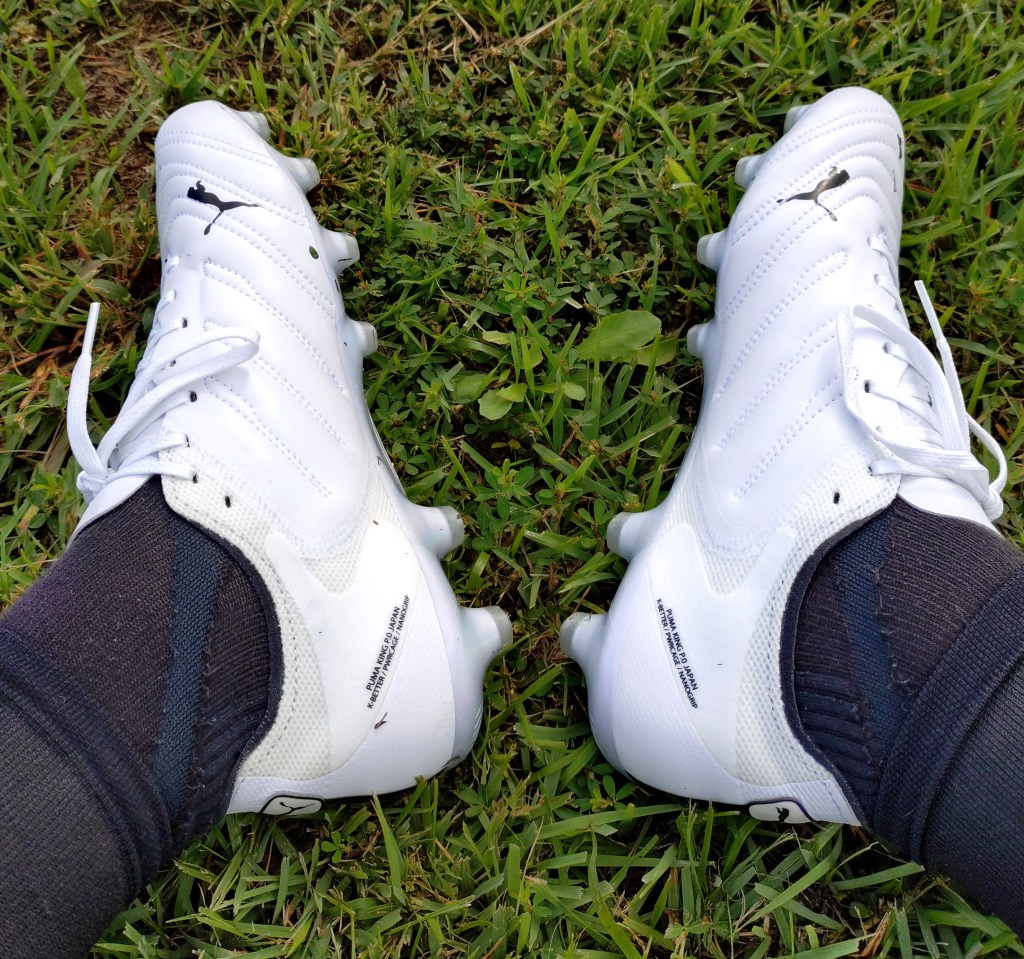
We all make mistakes, I know I definitely do. And one of the biggest I have made in the past year is not reviewing the Puma King Mirai Ultimate II earlier. It is a great boot, and sadly this might be the final model as it has not sold the way Puma probably wanted. It is a shame because a bit of tweaking could make the boot into a serious contender for a no-nonsense boot. Given how the market is going, I think we need more boots like the King Mirai. In some ways it reminds me of the New Balance Tekela Elite – a boot that is also somewhat simpler in its execution. Wherever Puma decides to go next with their Japan only boots, I hope that the Mirai is used a foundation to improve their offerings, rather than cast it off and let it be forgotten. But I am glad I finally tried the King Mirai, as it is just a good, unassuming, enjoyable boot.
If you like this review, please consider supporting by buying me a Ko-Fi or making a donation through the Support The Blog sidebar!
What do you think about the Puma King Mirai Ultimate II? Please share this with your friends and make sure to follow me on Instagram!
Also, check out the Football Boot Hour Podcast I co-host with Boot Wizard!
じゃあね!

 Lockhart Boot Blog
Thank you for your reply! I really enjoyed your article, keep it up!
LikeLike
You’re welcome. Thanks for reading and the support!!
LikeLike
This is a very comprehensive review. How is the grip on softer natural grass? Is it slippery?
LikeLike
It’s OK. But you’d want something more aggressive grip-wise
LikeLike