Comfort over all
There has always been something unique with Puma’s Japan only models, especially in regard to their touch silos. Puma has often offered hard ground specific models with softer uppers or even made in Japan models in order to make space for themselves in the Japanese market. While not as successful as years past, Puma’s Japan team still continues to make their own path forward. In the past few years, we have seen the King Mirai silo, which attempted to provide a slimmed down, more performance-based approach to the King series. While I enjoyed the original King Mirai, and even the final King Mirai Ultimate II, sadly neither boot was as popular as the Big Cat would have wanted. With the launch of the revamped King series, Puma Japan have instead decided to go for more of a comfort-based approach to the series. While I have been skeptical of this change, there is some merit to their method.
Fit and Feel

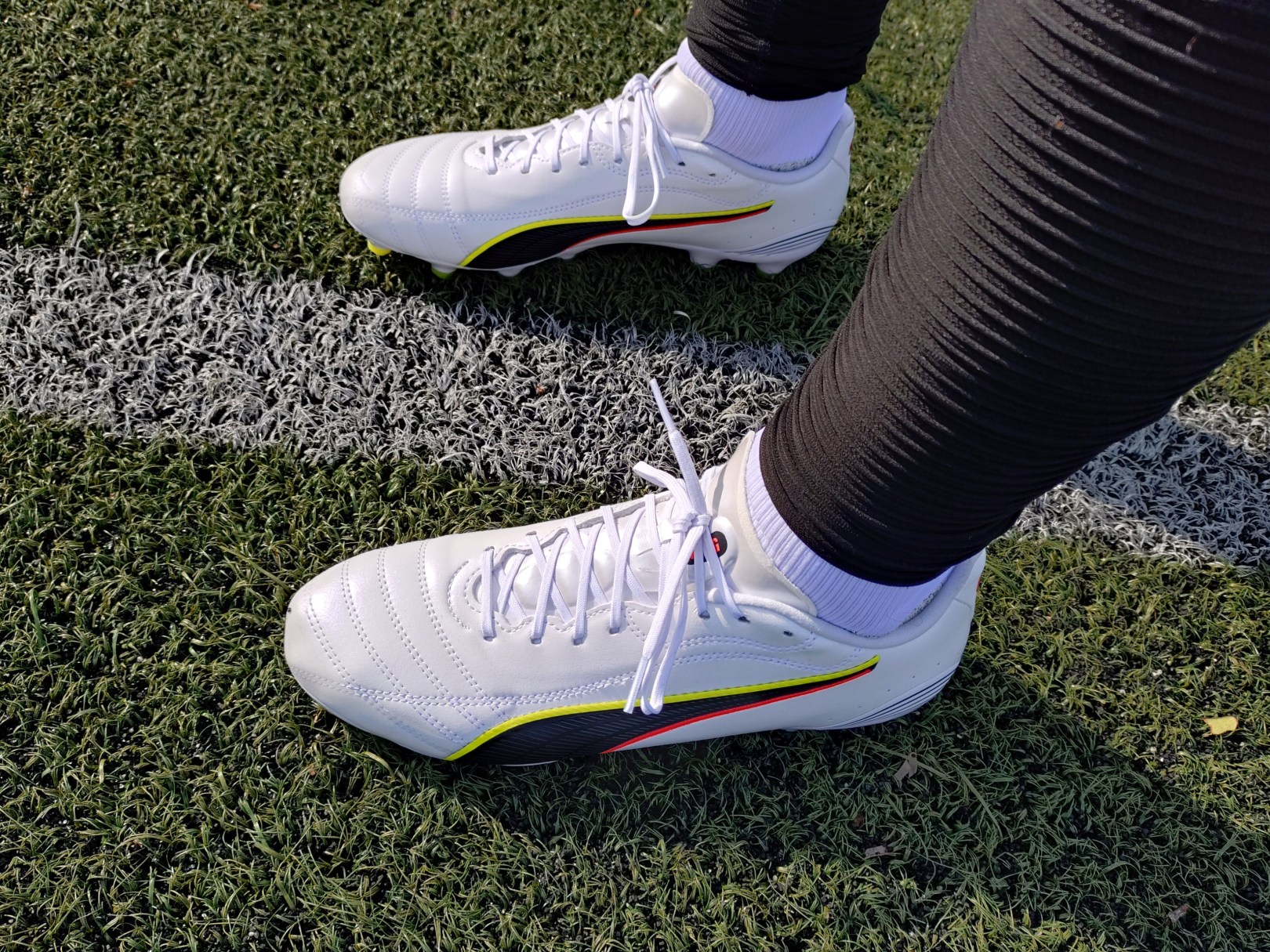
Out of the box the Puma King 20 Ultimate HG is not as soft as the previous King Mirai 2. However, the midfoot and heel are softer than their predecessor, and the switch to a cushioned stitch and turn heel is a welcome change. It is obvious that Puma decided to focus more on comfort for this new model rather than performance. I do somewhat wish they did not scale back the performance aspect so much, however I can appreciate that for some people comfort comes above everything else.
The stiffer upper does mean that breaking in does take slightly longer than I would like. During the first session of about forty-five minutes, I found myself disappointed with the upper. However, by the second session I was much happier with the boot, and it felt good to go after that session. While the upper still feels slightly stiffer than the previous K Better on the Mirai 2, the fact that the upper is now entirely made of the same material means that the fit and feel is more consistent. And it is comfortable overall.
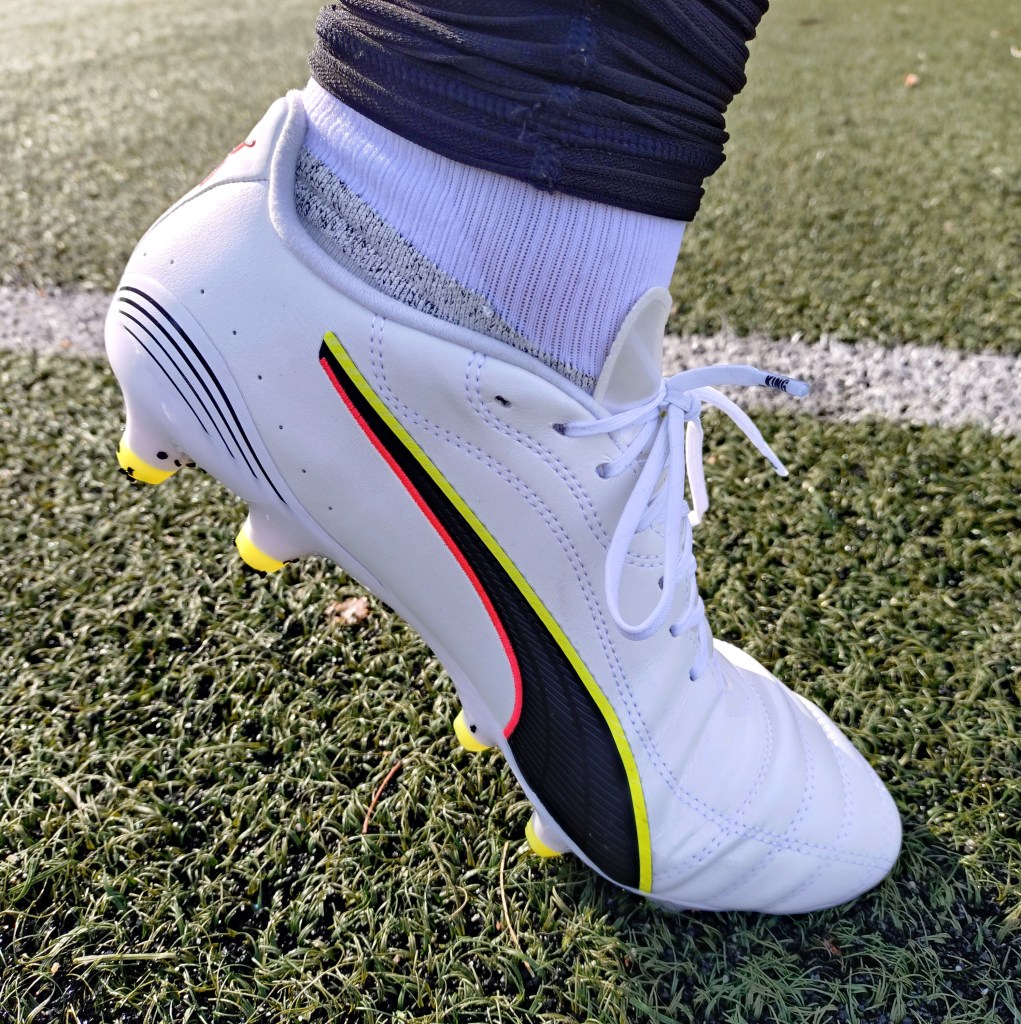
This is partially down to the face that the shaping of the boot has changed, and the toe is more rounded now, so it fits around my toes better than previously. The toebox is also taller as well, but not overly so. Given the theme of the boot is comfort, it’s a solid change.
One of the drawbacks of the softer midfoot is that the lockdown is not as great as other comfort focused boots on the market. At the same time, I would argue that if you are going for comfort above everything else, the weaker lockdown is not really an issue.
Another way to tell that the boot is more for comfort than anything else is that the upper is relatively thick. It somewhat feels like a throwback to an era of boots with thick leather uppers.
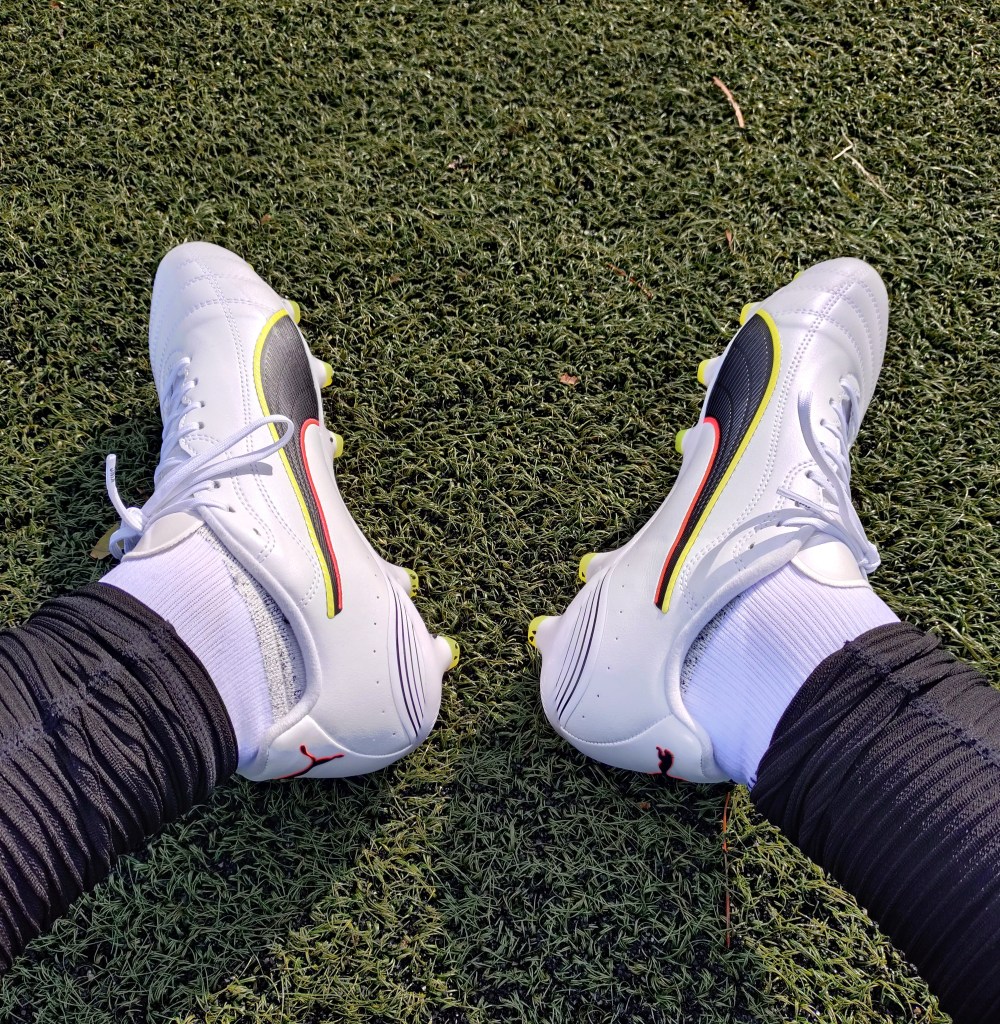
In addition to this, there is this nice, soft lining all over the inside of the boots that makes it feel like a pair of house slippers, in the best way possible for a pair of boots. And along with this, the heel on these King 20 is one of the most comfortable on the market. The overall shape is fairly neutral, meaning it will fit a lot of different shaped heels. And as one would expect from a Japanese market only boot, there is an extra lacehole for a runner’s knot.
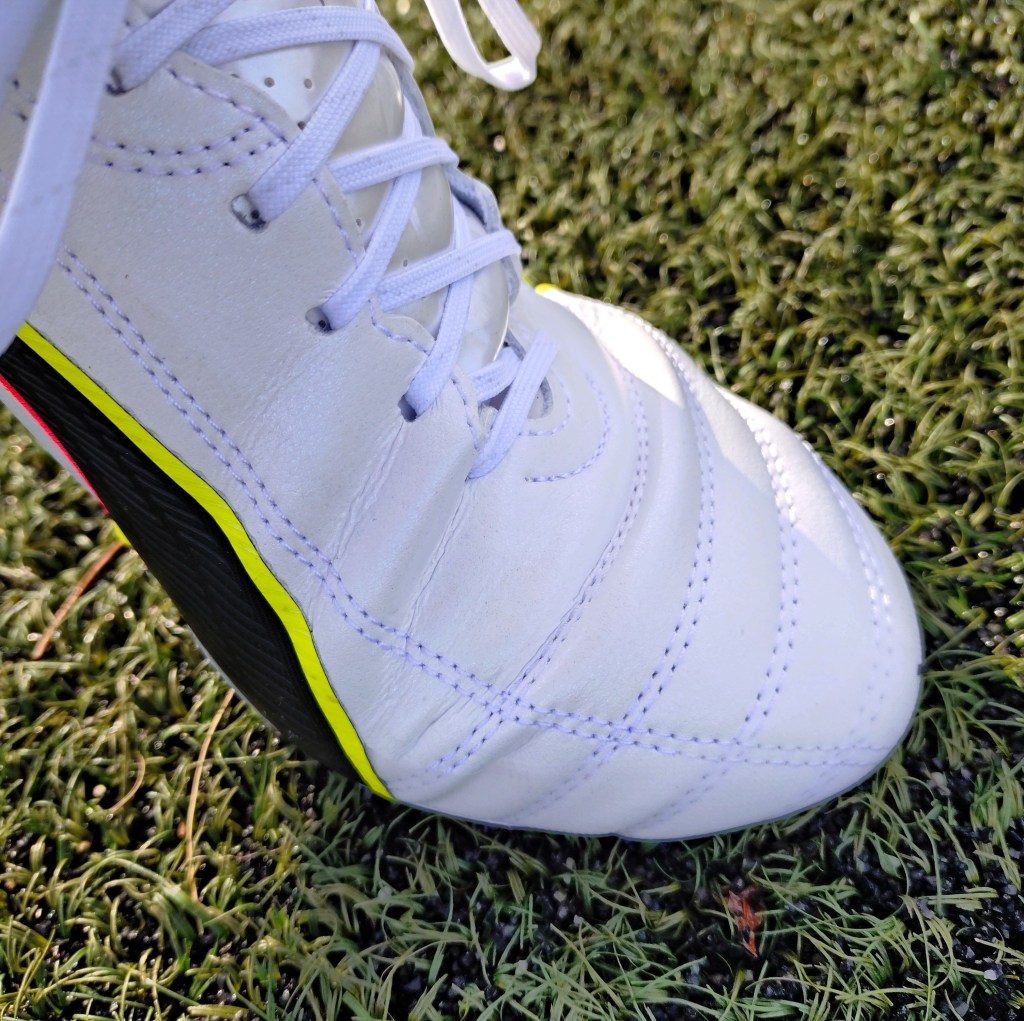
The only real major issue I have with the boot is the fact that the area around the top lacehole runs higher up than ankle than I like. I found that during my sessions that it was rubbing against my ankle bones. It did not cause blistering, and even this area of the boot is cushioned. However, it still is noticeable enough when I am playing in the boots.
Quick shoutout to the rubberised toe, as this means that the upper is protected from harsher surfaces and helps the boot give this feeling of good durability.
I also have to mention the Ortholite O-Therm insole, which has some nice cushioning and according to Ortholite, keeps your feet warm in winter and cool in summer. I will say my feet did not feel cold when wearing the boots (I am testing these in the middle of winter), but it has not been so cold outside to the point that I could really tell much of a difference.
Since the boot is more comfort focused, and it is very much trying to mimic the feel of a classic leather boot except with a synthetic upper, this means that the stability is not as strong as other similar boots on the market. For people who want comfort more than anything else, this might not be an issue, but it is something to take into account if you are planning on getting a pair.
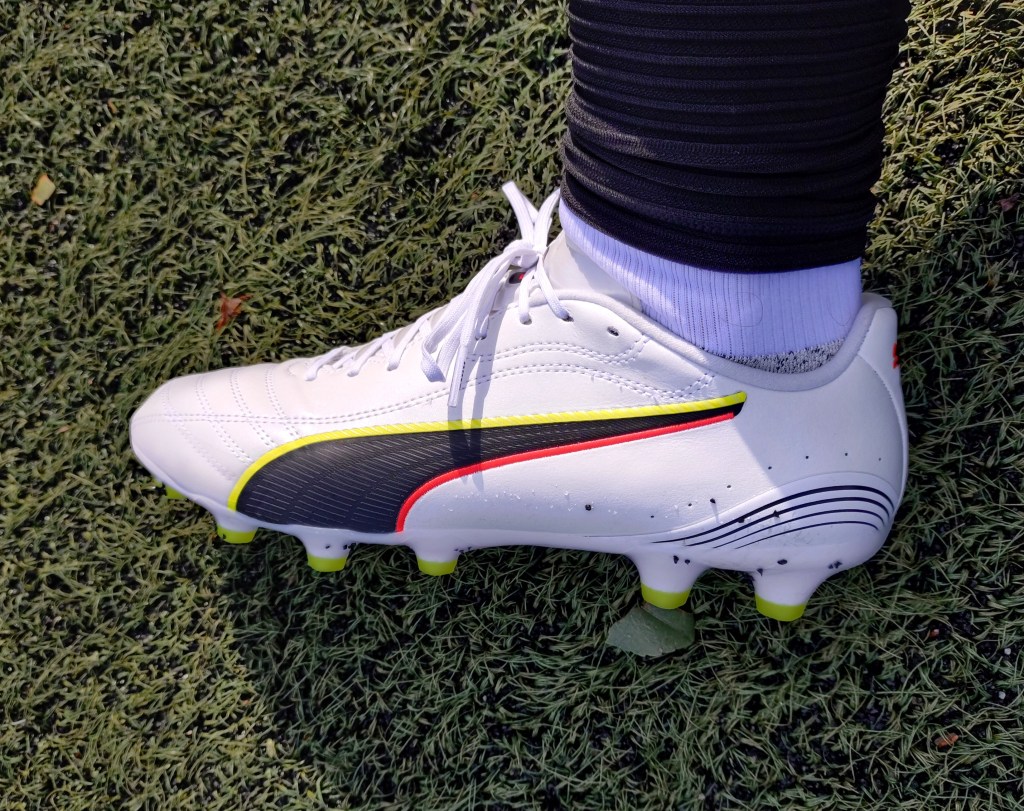
On the other hand, more positively speaking, the boot has a deep, central lacing system and there is a lot of adjustability. This means that even if your foot is on the wider side, the boot is accommodating.
As for sizing, similar to the Mirai II, I went half a size down from my normal size in Puma. This means in the King 20 Ultimate HG I got a US 8/UK 7/EU 40.5/JP 26 and the fit in the length is perfect. I recommend a half size down if you are looking at a pair, unless your feet are very wide.
On the Ball
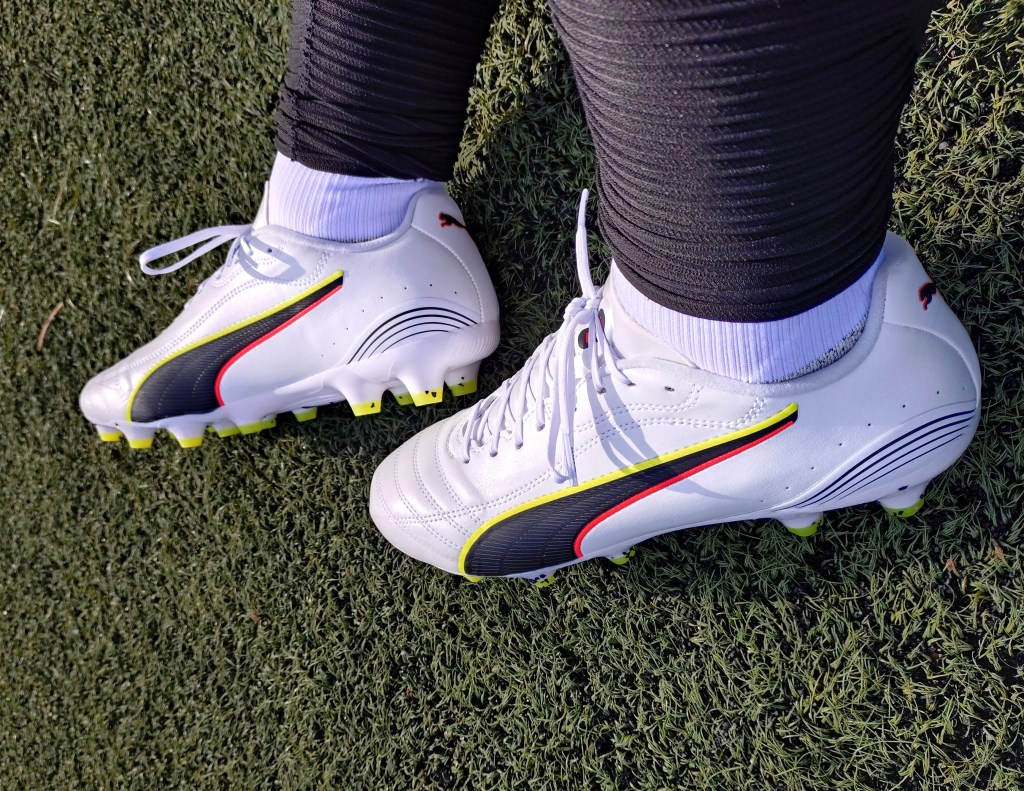
Similar to a classic leather boot, the King 20 HG is no nonsense on the ball. The cushioned upper gives a dampened touch in the ball and the upper is thicker than many boots on the market. I would not go as far as to say that there is no feeling on the ball, but the cushioning is very noticeable.
As far as dribbling goes, again, nothing crazy. Just a consistent, dampened feel on the ball. Not sharp, but again that is not really the point of this boot. Also, I have to mention that slightly rough surface on the studs, as always because I like to roll the ball around with the bottom of my foot.
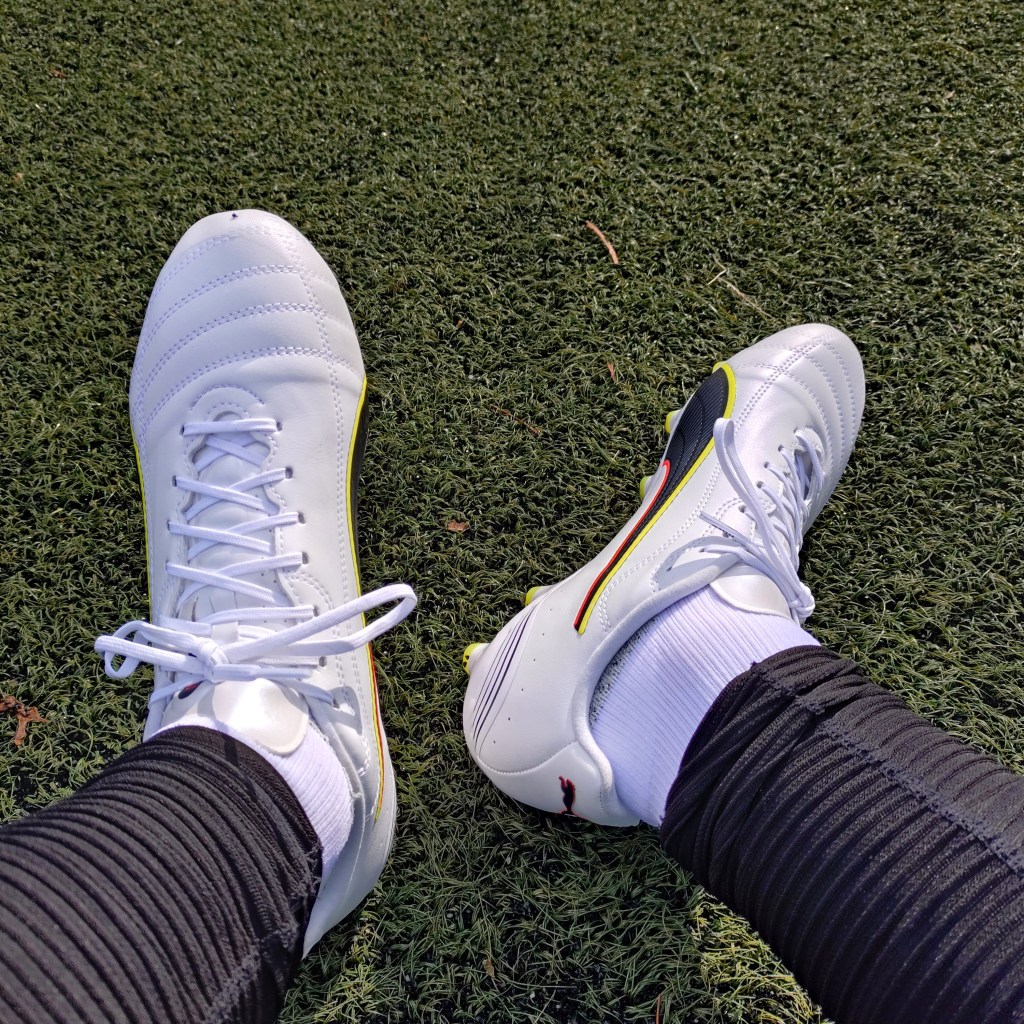
What I do find surprising is that I really enjoying the feedback when shooting in the King. It is because the upper is so thick but, I feel like I can absolutely smash the ball with no negative feedback. I enjoy driving the ball in the boots, and it’s really fun to do so.
Grip
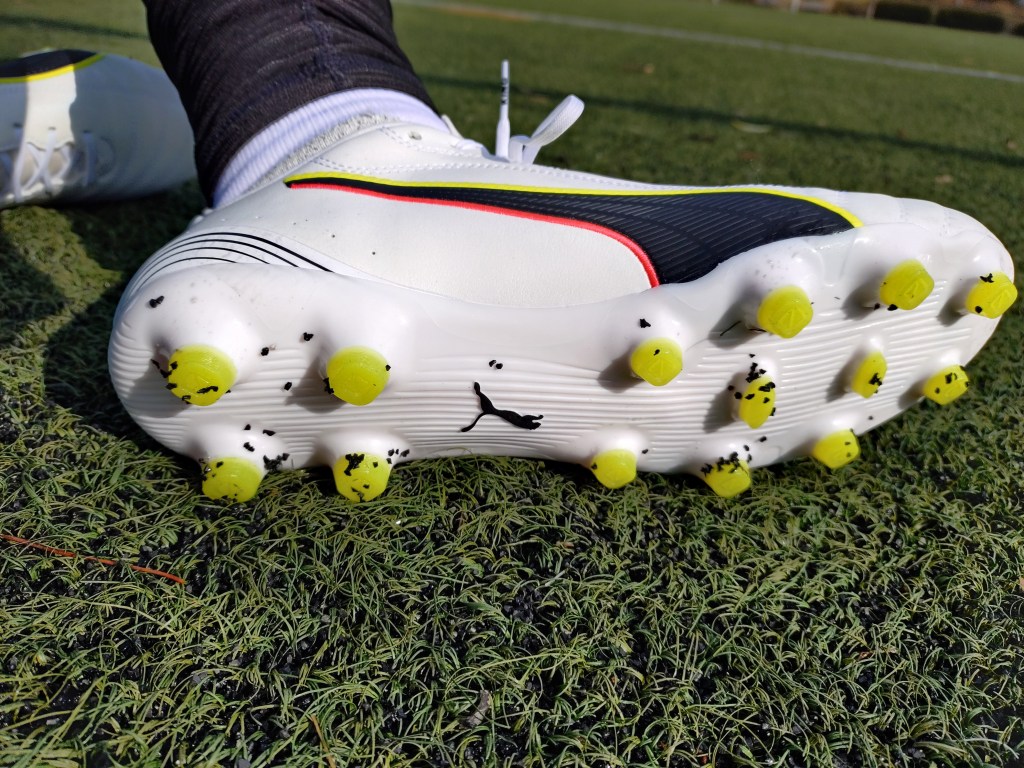
No surprises here, as the soleplate is Puma’s standard hard ground soleplate. It is not complex or anything, but it has a nice, comfortable ride. The grip is good on AG and HG and even works decently well on hard firm ground surfaces. It is a multifunctional soleplate, but do not expect to go breaking any speed records in it.
Alternatives
The Puma King 20 Ultimate HG is priced to compete with the adidas Copa Icon II as well as the (albeit cheaper) Nike Tiempo Ligera Pro (review coming soon, by the way) and the recently launched ASICS DS Light Pro. The other boots have a slight edge over the King as they are more what a lot of people are looking for, which is both comfort and performance. I would not go so far as to call Puma’s decision to go in a different direction with the King a mistake, but it does feel a little weird, especially given how the Mirai II was seemingly set up to fail because of the lack of marketing.
Conclusion
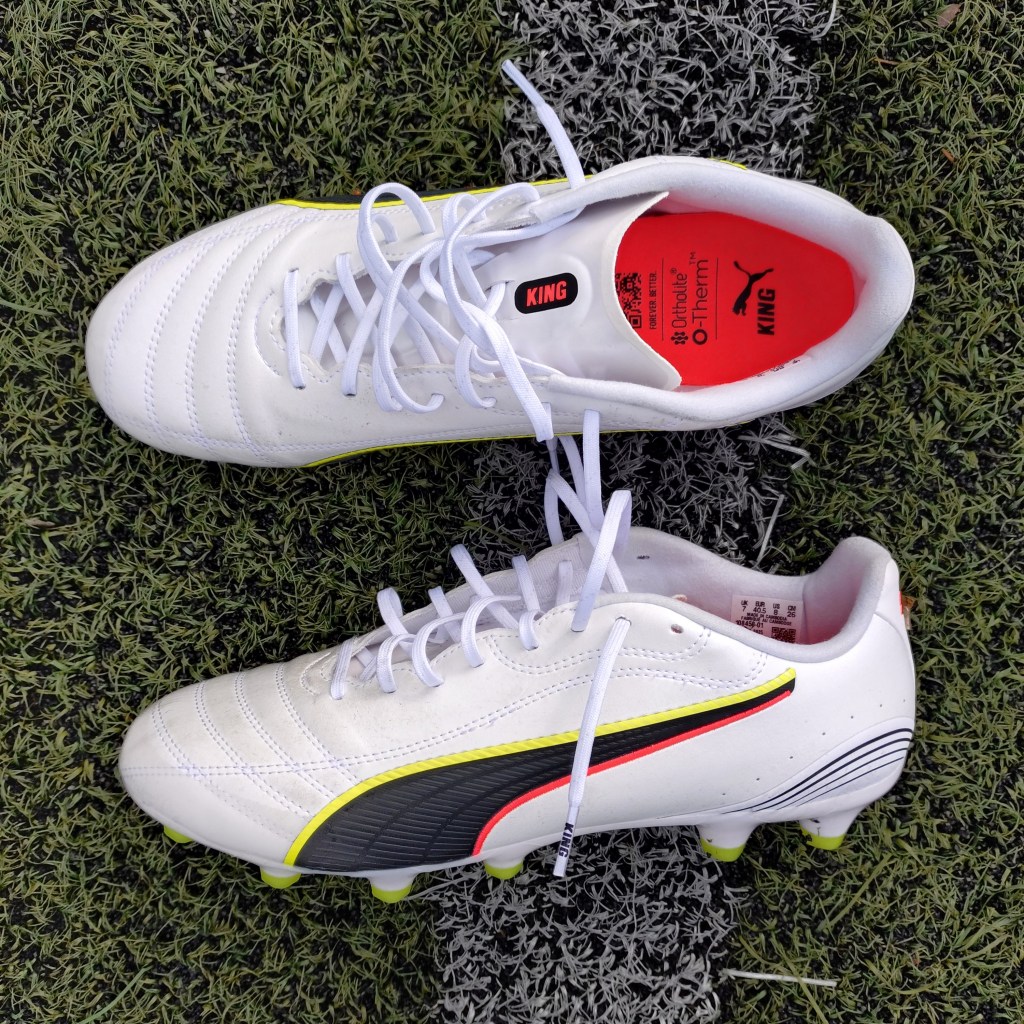
In a way then, the Puma King 20 Ultimate HG feels like a callback to a different time in football boot history. Back when it mattered more if your boots were comfortable rather than any performance aspect. Whether or not this decision will go well remains to be seen, but I can somewhat understand the change of direction on Puma’s part. And again, the boots are very comfortable and a more tank like feel enough to go into battles with. If that’s what you want in a boot, it is difficult to find anything else like them on the market. So, hats off to Puma for being unique in a positive way.
If you like this review, please consider supporting by buying me a Ko-Fi or making a donation through the Support The Blog sidebar!
What do you think of the Puma King Ultimate 20 HG? Please share this with your friends and make sure to follow me on Instagram!
Also, check out the Football Boot Hour Podcast I co-host with Boot Wizard!
じゃあね!

 Lockhart Boot Blog
These sound like the synthetic version of Diadora Maximus, but with improved comfort. Tank like build; i’ve seen people smash my foot and hurt themselves lol. But especially with the pro variant, the ball feel is great to me even with all that padding. Pure cushined leather from forefoot to deep midfoot with a super stiff modern sole. I haven’t seen this combination anywhere else. Fit is not amazing unfortunately, as often it is the weak point of italian brands afaik. That said i will surely try these pumas too (albeit with fg plate), though i doubt they can match the superb touch of those diadoras.
LikeLike
Yeah, it seems to be very much like a Diadora boot. The FG build is different from these though
LikeLike
So i tried the black FG version of these and found the fit and padding to be pretty good. But a boot this padded just does not go well with synthetic imo. I barely feel the ball unlike with leather stuff that also have similar padding like the above mentioned diadoras or the newest mania remakes. I also had the same rubbery feeling when i tried the new Ligera pro AG. These synthetics are really not a substitude for real leather imo. They are their own thing, whatever it is.
LikeLike
Well the FG upper is fairly different from the HG. Yeah, leather is still king for sure
LikeLike
“Leather is still king” but the king is not leather anymore lol. Also i didn’t know the upper was different with the HG soleplate. Now that is weird.
LikeLike
Yeah, the stitching and shaping is different as well. There is actually a King platinum and a King Top that just launched that are leather, actually
LikeLike