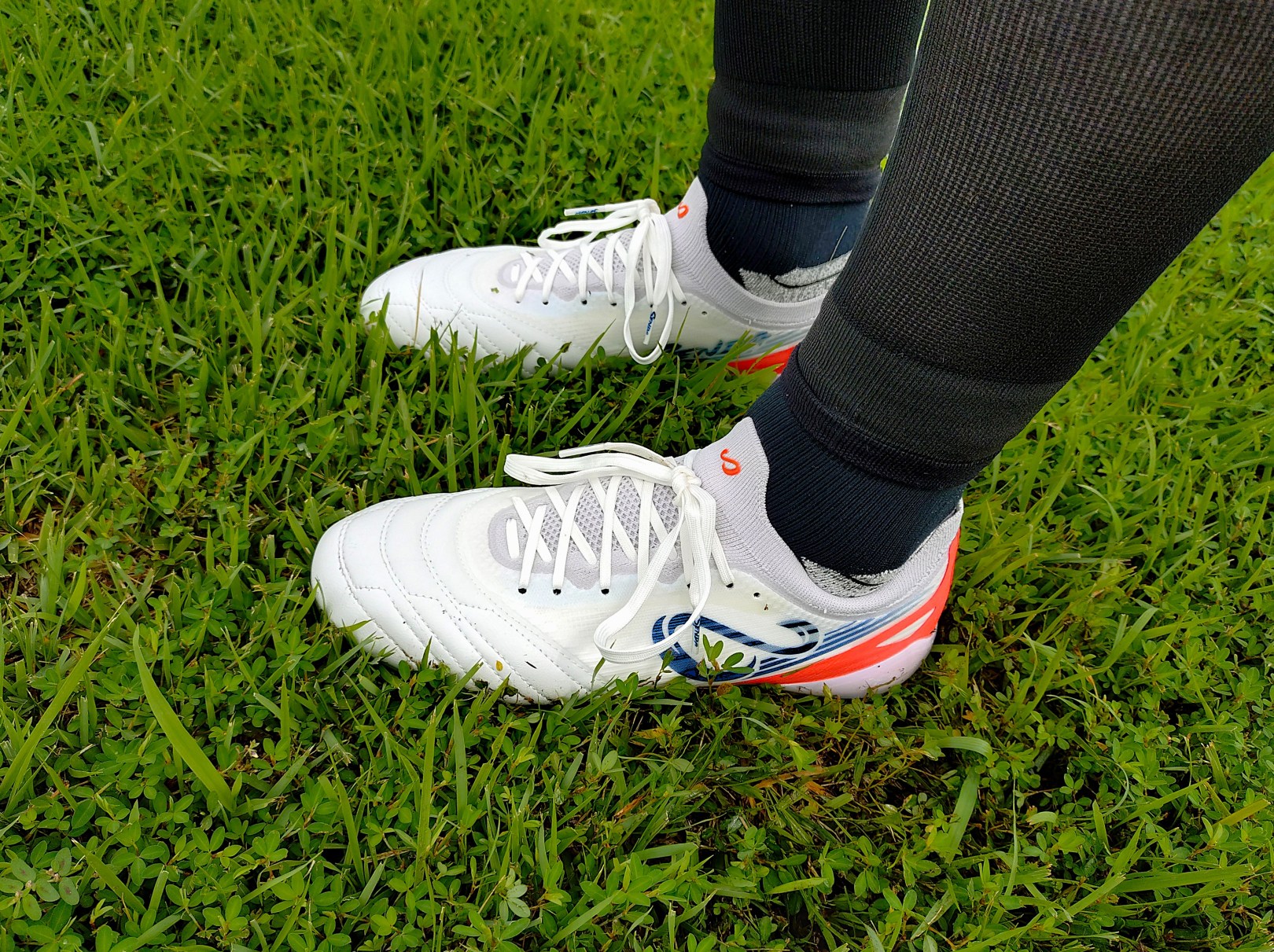
Thank you to Senda for sending me the boots
Unfinished
While Senda has been making their own futsal shoes for years, the release of the Mendoza and the Rosario boots marks their first foray into the boot world. Most notably, the Senda Mendoza Elite were the boots that Cabo Verde goalkeeper Vizinha wore during his country’s heroic World Cup run. Many brands could only dream of having this kind of exposure for their first boot. Senda has also always ensured that their products are made in Fair Trade factories, meaning that the workers in these factories have their rights protected and receive fair pay. An admirable standard that more brands should meet.
But all that hype can go to waste if the actual product doesn’t meet the high standards required to make an impact in the boot world. The Mendoza Elite has some nice ideas and is close to being a solid boot. However, the boot feels like it didn’t get enough time in development, to the point that it feels like an unfinished product.
Fit and feel
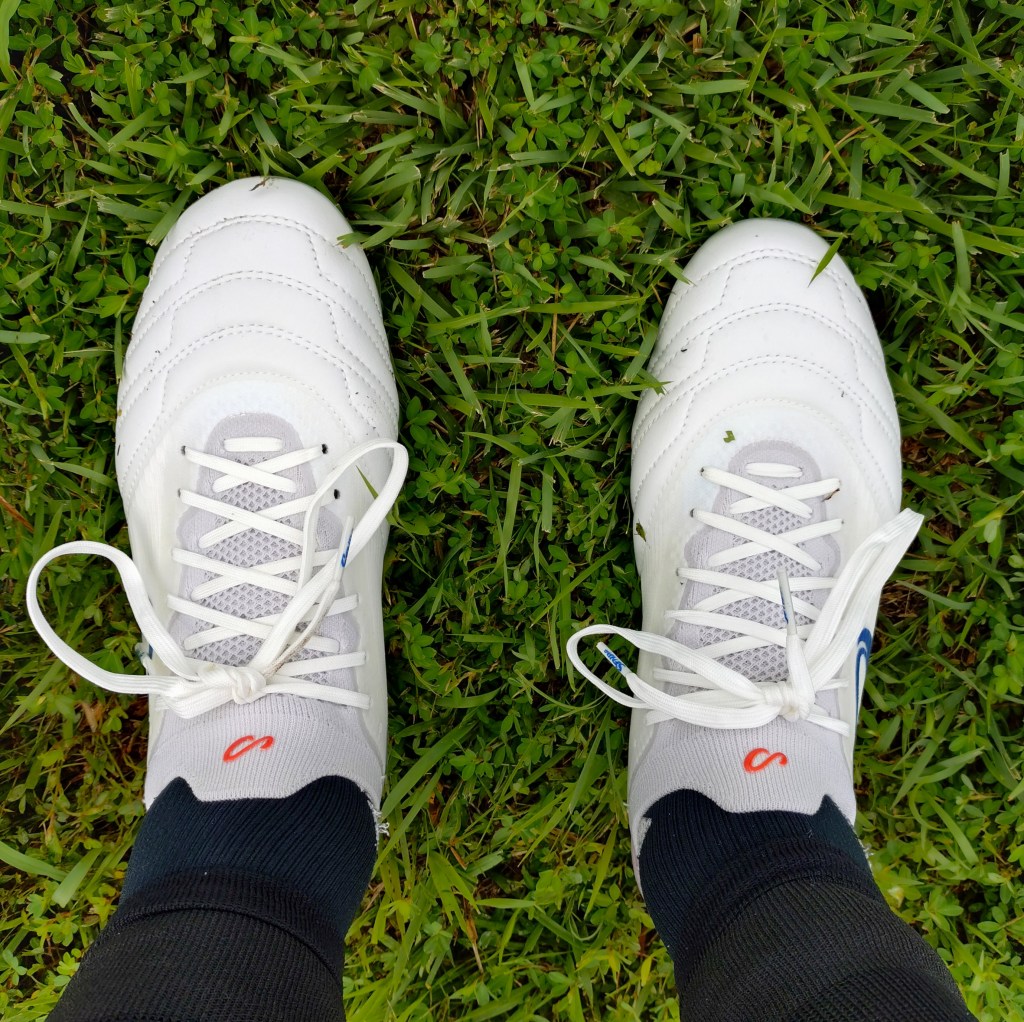
One of the positives of the Mendoza Elite is that the synthetic leather upper feels nice out of the box. This synthetic forefoot is fairly plush, and while it is thicker than many other synthetic leathers on the market, it is obvious that Senda put a lot of time and attention into creating this material.
The initial comfort is fairly good, especially in the plush forefoot. The midfoot material is not too soft initially, but it is softer than I expected it to be. It is a strange juxtaposition, however, as the plush forefoot and the thin midfoot do not seem to match as well as I’d want them to. I wish that Senda made the midfoot material slightly thicker or made the forefoot material a bit thinner. It does remind me of the X 99 Speedportal Leather in this way, though less positively.
In terms of lockdown, overall, it is above average. The knit on top of the midfoot helps keep the foot locked in place, and I would argue that it doesn’t need to be stronger than this as that is not the point of the boot. The lacing system is also deep enough to offer some adjustability to the overall fit.
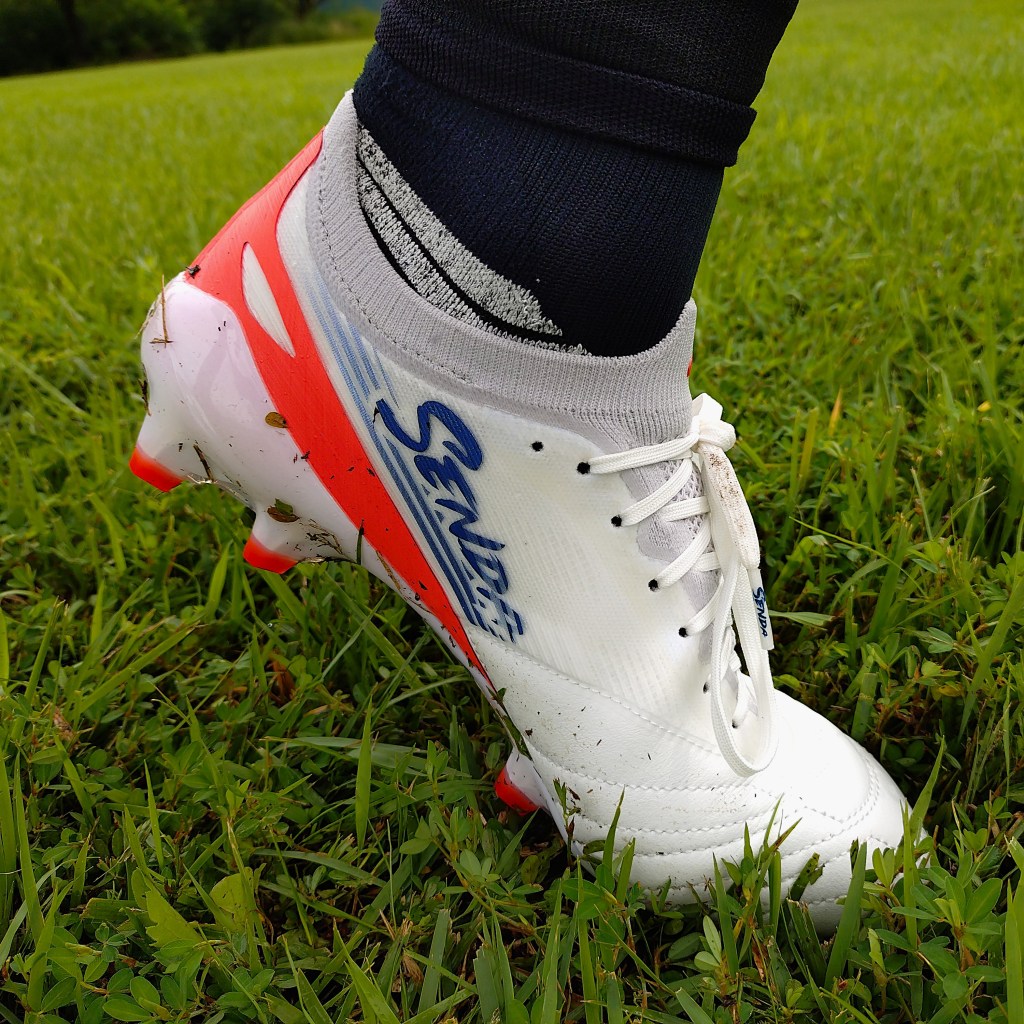
At the same time, the lacing setup also shows part of the reason why I think the boots feel unfinished. There is an extra lacehole towards the top of the boot that ostensibly is there to enable the wearer to do a runner’s knot. However, because the boot has a knit tongue connected through the midfoot, this means that in order to make a runner’s knot, you have to put the laces under the tongue, then pull them out from under in order to make the loop for the runner’s knot. This would make for an awkward lacing setup should you decide you need the runner’s knot.
If Senda wanted to give the wearer the ability to do a runner’s knot, it would have been better for the Mendoza to have a floating tongue, so that it is easier to make the loop needed for the knot. The fact that the lacehole is still there seems like a mistake.
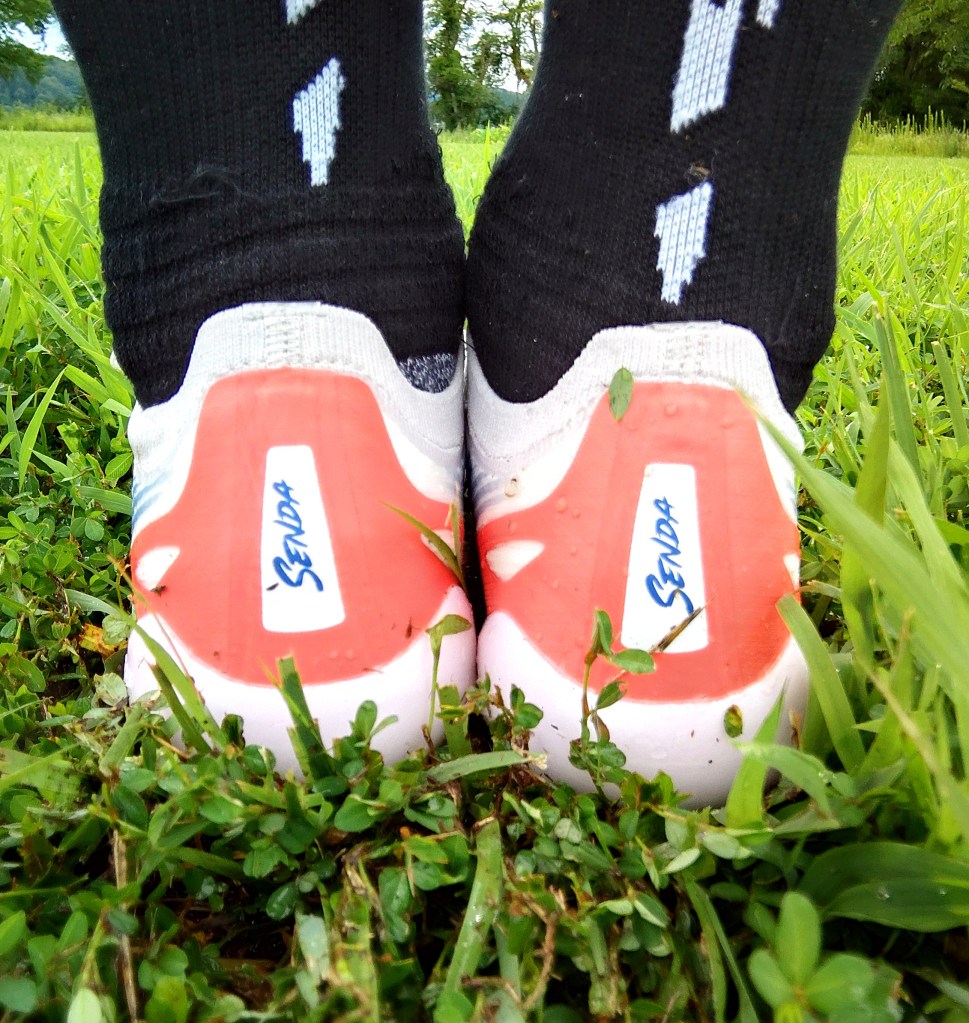
As with every boot reviewed on this blog, we also need to talk about the heel. Initially, I thought the heel was comfortable when trying the boots on. However, in action, the heel not only does not have enough cushioning, but the shaping is also flat across the back of the heel. Even after close to three hours in the Mendoza Elite, my heels still felt sore at the end of every session. It is a similar issue that Nike has had with some of the heels on their boots, like the Vapor 17.
Senda does deserve credit for including an additional set of insoles and laces with the Mendoza, and I find that the replacement insoles are better than the ones from out of the box. The extra laces are a nice touch, as well.
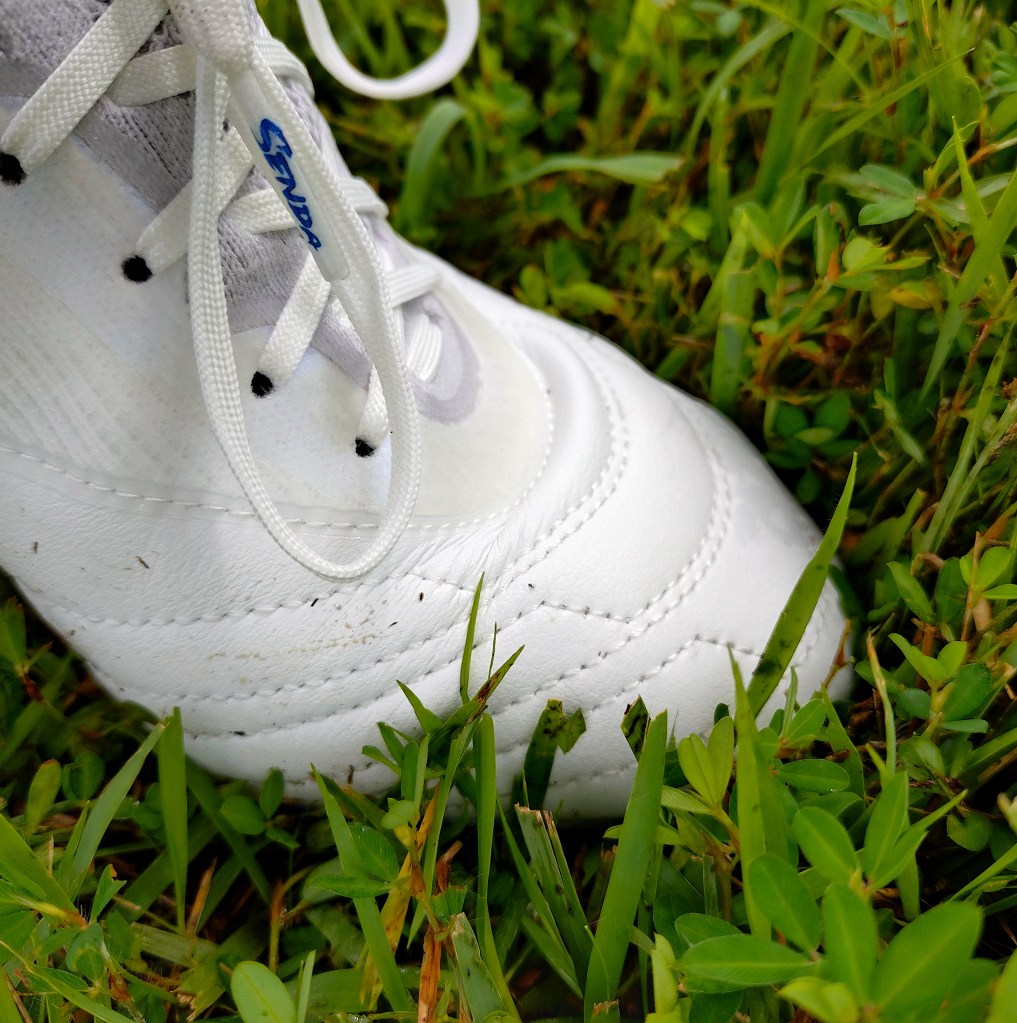
When it comes to the breaking-in period, it is longer than other synthetic leather boots on the market, taking about an hour or so for the forefoot to fully break in. The synthetic midfoot takes slightly longer, but by the end of the second playtest (around two hours), the boots felt ready for match action.
For the sizing, I went with my normal size, which means I got the Senda Mendoza in a US 8.5/UK 7.5/EU 42/JP 26.5, and while I like this size, if your feet are on the wider side, I recommend a half size up.
On the ball
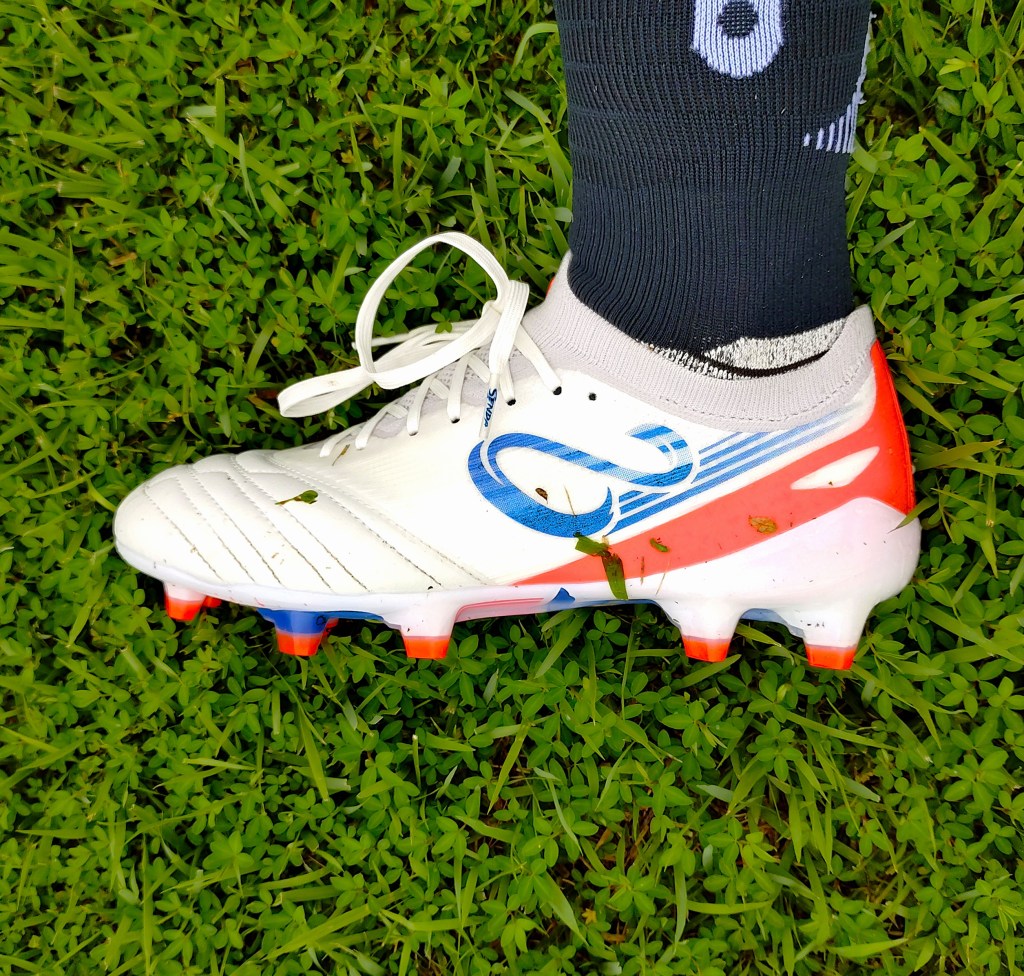
Perhaps unsurprisingly, the plush forefoot of the Mendoza means there is a nicely cushioned touch on the ball. Again, this does mean that the touch feels more dampened on the ball. While I do normally prefer boots with a thinner upper, I still think that the touch in the Mendoza is good.
However, the super thin midfoot material is jarring with how different the touch is on the ball. On this section of the boot, it is very thin, much more like a speed boot. To reiterate a point I made earlier, the boot would have benefited from a thicker material through the midfoot. But because the forefoot and midfoot materials are so different, it feels like a mismatch.
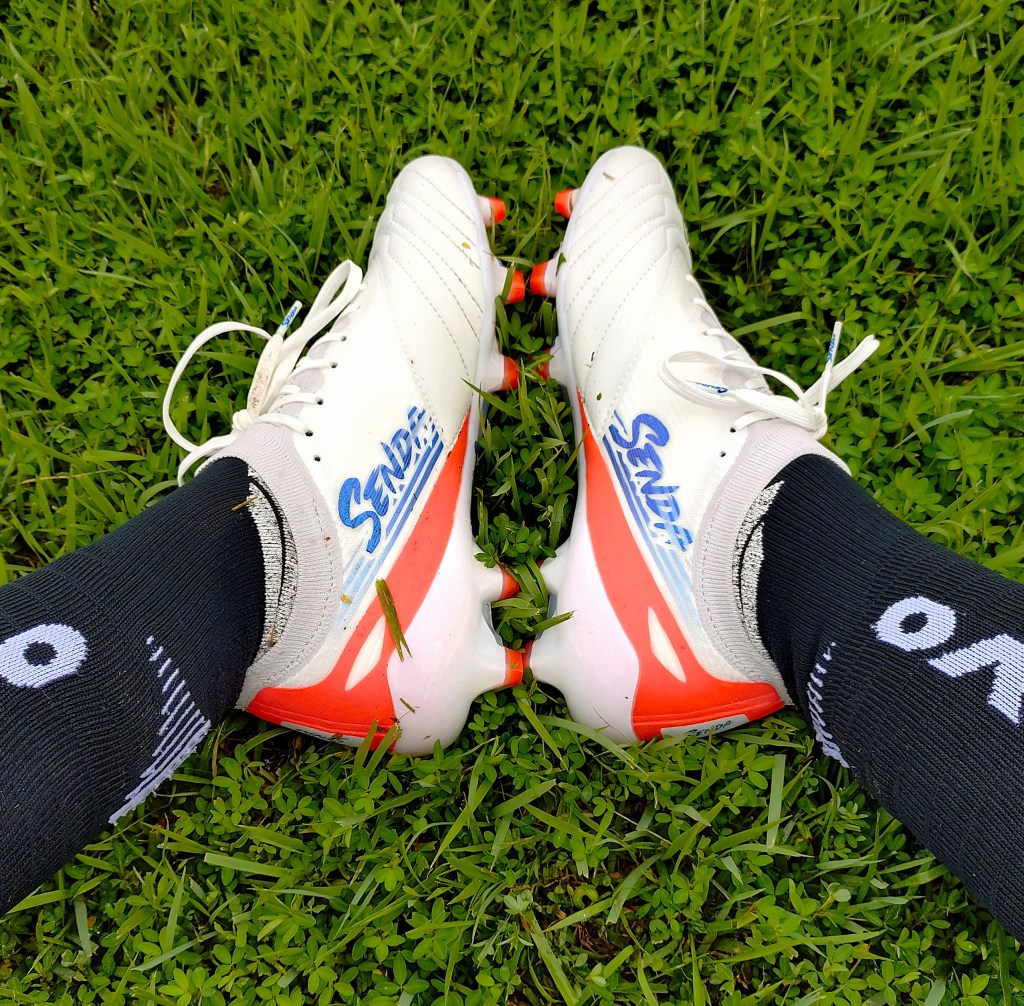
Unsurprisingly, when hitting the ball with power, a lot of the sting you might feel in boots with thinner forefoots is not present here. On the one hand, this might be preferable for some people who want a bit more cushioning. On the other, however, this does mean that when shooting and crossing, there is a deadened feel on the ball.
Grip
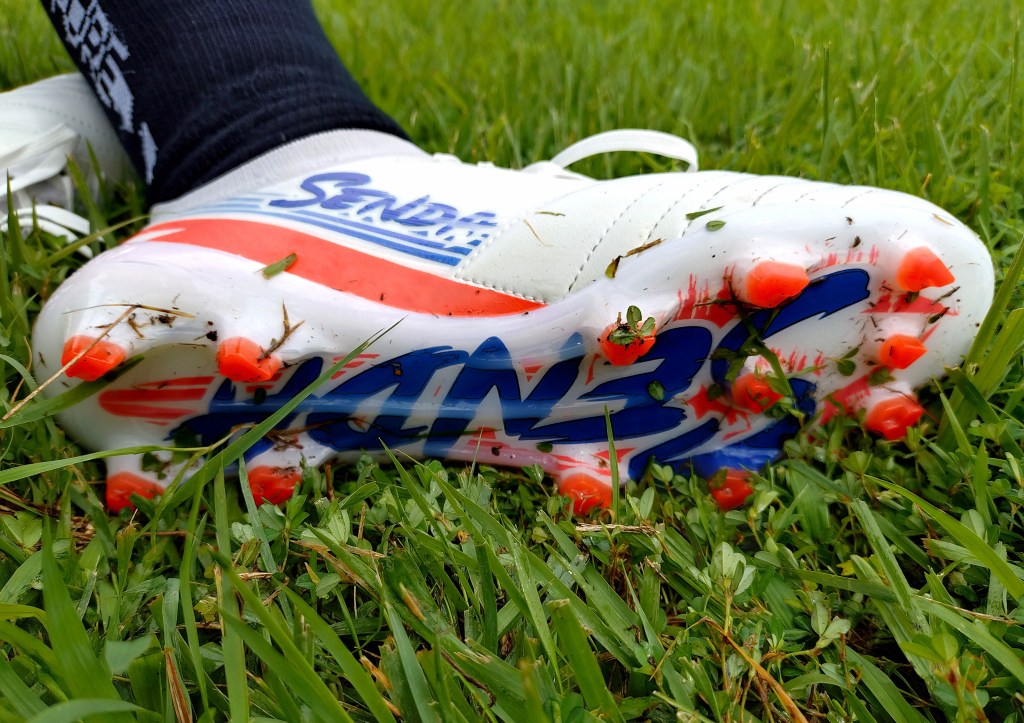
The shape and placement of the studs is another positive of the Mendoza Elite. I don’t mind that it shares the soleplate with the Rosario as I feel the soleplate is multifunctional enough for different use cases. It also saves the company some money, which could be used to do more with the uppers of their boots.
Unfortunately, the studs are also fairly tall, and outside of a firm or slightly soft pitch, the studs are wholly unsuitable for any other type of surface. This sadly means that the potential customer base is immediately limited unless Senda comes out with an AG soleplate.
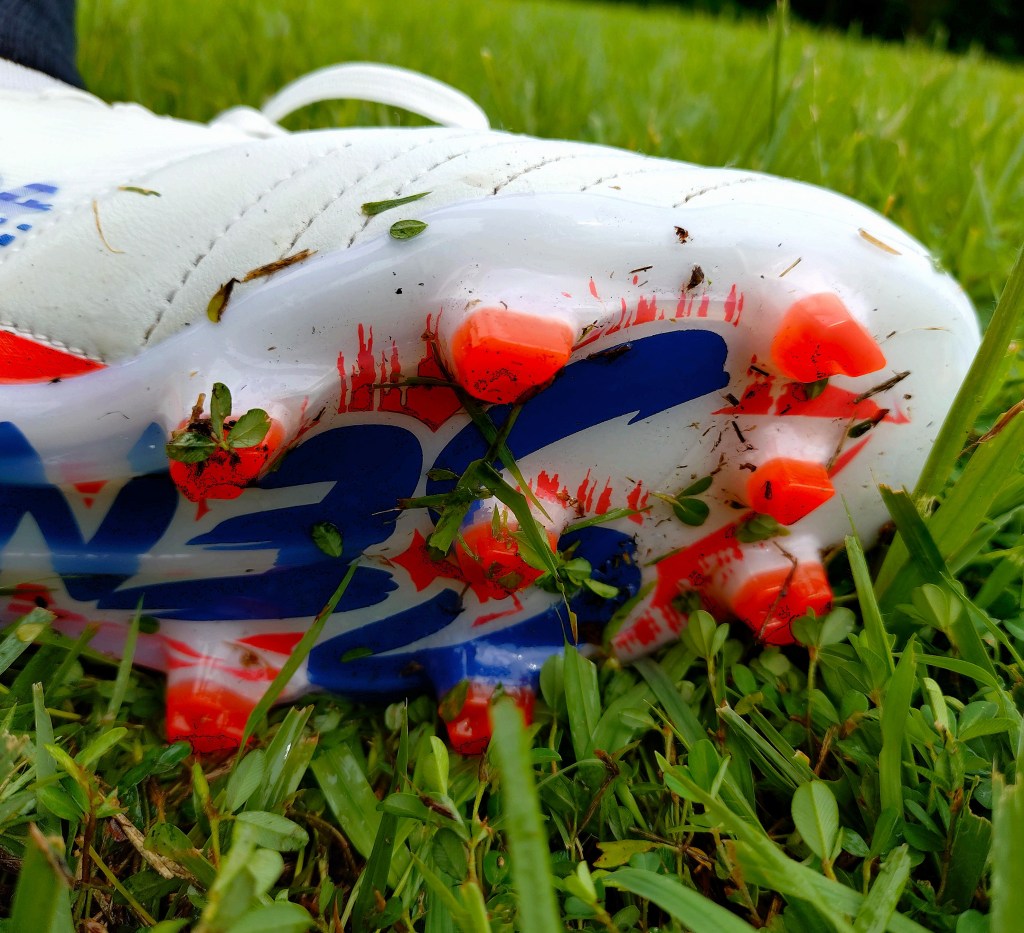
Even worse, the place where the soleplate flexes easiest is towards the back of the midfoot, which makes the boot feel unstable. This has been more noticeable as some of the pitches I play on are considered hard ground, and a combination of the tall studs and flexible soleplate means the boots feel unbalanced.
I don’t understand why Senda decided to make the forefoot stiff but not the midfoot. Any snapback that the forefoot could offer is negated by the softer midfoot. For me, I don’t even think the boots need to have snapback, as these are supposed to be a touch boot, not a speed boot. It is another strange decision that feels like it would have been fixed had the boots spent a longer time in development.
Pricing
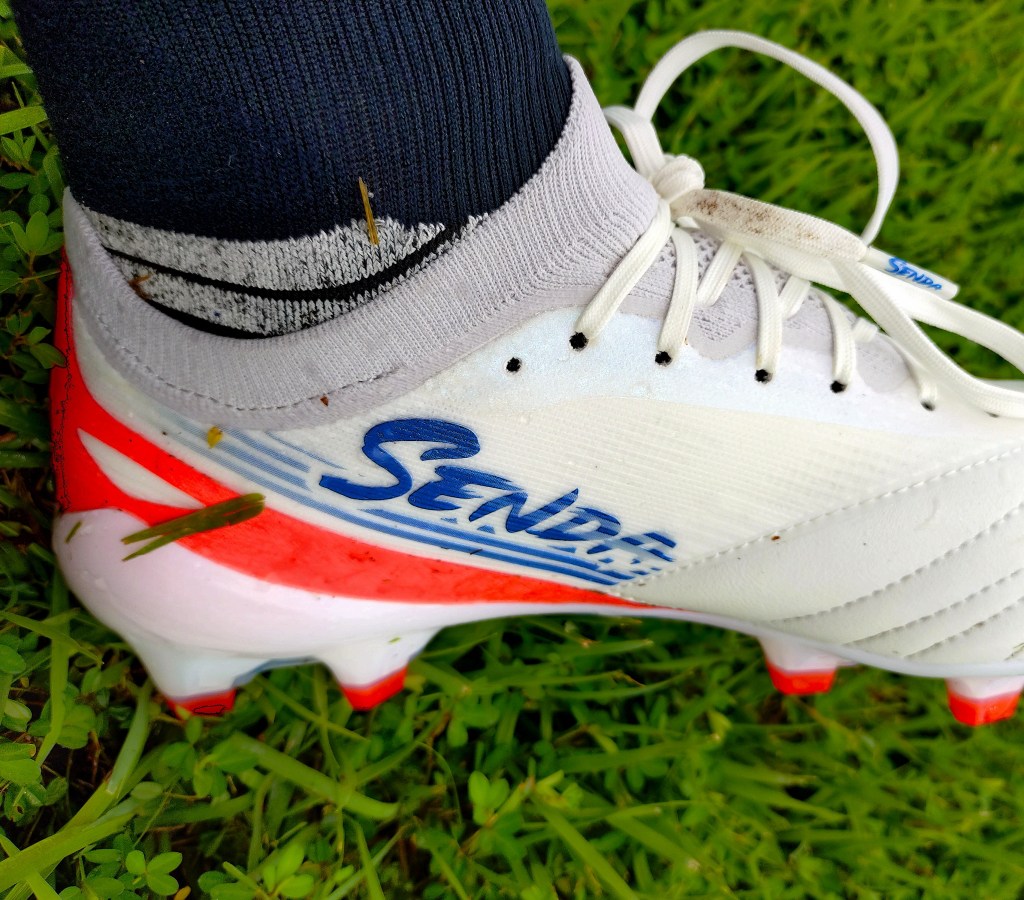
Frustratingly, it seems that Senda did not read the market when deciding on the pricing for their boots. The boots retail for $225 in the US, or ¥36000 (Japanese Yen) if I were to order the boots directly from Senda to where I live. While I wouldn’t call the Mendoza a cheap-feeling boot, the price point suggests a higher quality boot than what Senda has delivered.
Making your first boot on the market that expensive immediately prices out a lot of curious customers, and in my opinion, the boots should be around 25% cheaper in order to entice buyers into a new brand.
Even worse for Senda, their competition is far cheaper, with boots like the Nike Ligera Pro coming in at close to 30% cheaper. At the time of writing, even some of the Tiempo Maestro Elite colourways are cheaper than what Senda is charging for the Mendoza.
I’ll spare the absolute trouncing the boot gets compared to Japanese domestic prices, as the yen is super weak right now.
Unfinished, underbaked
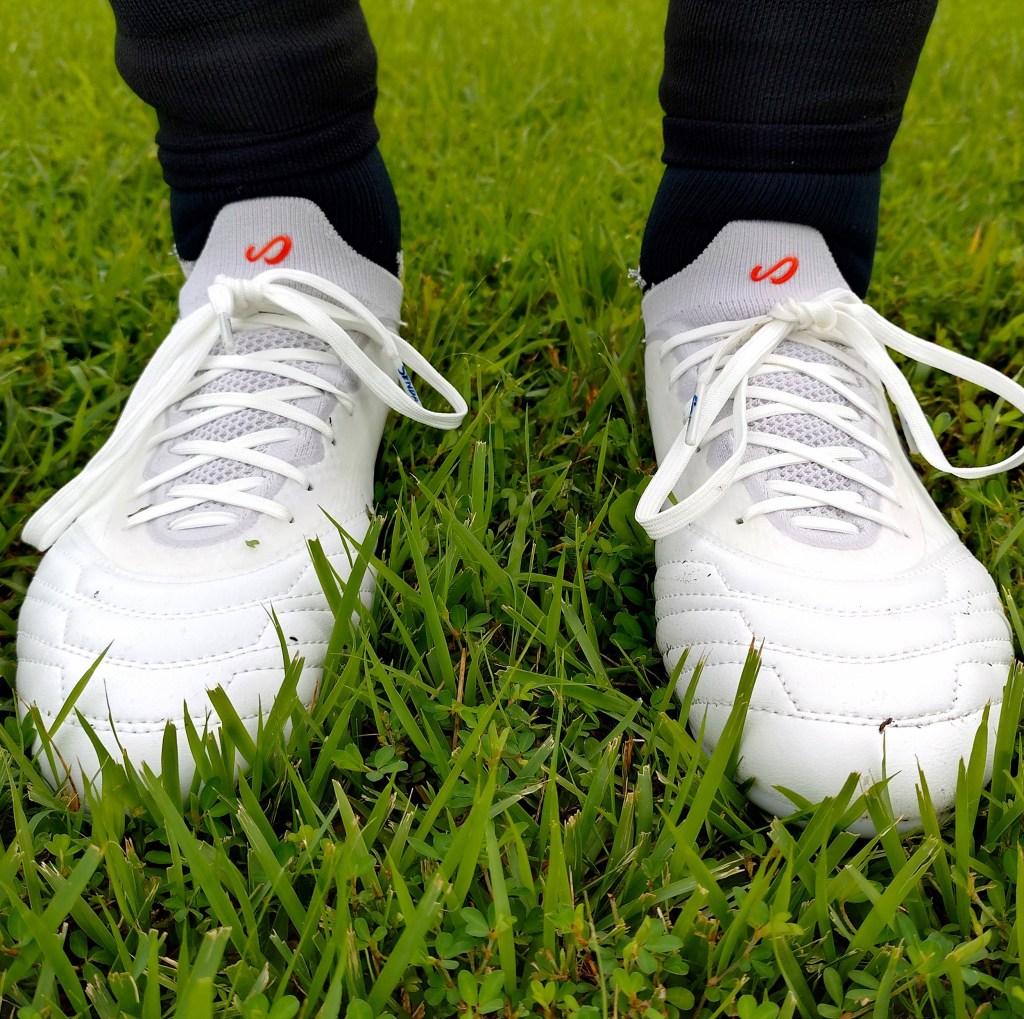
I need to get this out of the way: I don’t want to give boots like these a bad review. I want more brands to enter the market and take risks. When there are more brands making good boots, everyone else must improve in order to compete.
And Senda has built up enough of a market presence for itself elsewhere in the football world to the point that it was reasonable to expect that they would have a good first release when it came to football boots. While the synthetic leather used on the boot is nice, it doesn’t match the thin Speedboot-like material in the midfoot. There are also flexibility issues in the midfoot, as well as the overly tall studs. Sadly, not only do the Senda Mendoza Elite’s flaws outweigh its positives, but the relatively high price for their boots also means that they put them out of the reach of potential customers.
While the Mendoza does feel unfinished, there are some good ideas here that, if worked on diligently for a second generation, as well as having a lower price, Senda could begin to compete on the market. As it is, there are not enough reasons to recommend the Mendoza, unfortunately.
What do you think of the Senda Mendoza Elite? Please share this with your friends and make sure to follow me on Instagram!
Also, check out the Football Boot Hour Podcast I co-host with Boot Wizard!
If you like this review, please consider supporting me by buying me a Ko-Fi or making a donation through the Support The Blog sidebar!
I split my time between wearing HAVO Grip Socks and PureGrip Socks for training and matches.
Use code LOCKHART15 to get 15% off your HAVO Grip Sock order or click the link here: https://havosports.com/LOCKHART.
Use code lockhart for 10% off your entire PureGrip Socks order here: https://puregripsocks.com. Along with the socks, I also recommend the Pure laces and Pure Carbon 2.0 shin guards.
じゃあね!


Would adding an aftermarket carbon plate to put under the insole help alleviate the outsole flexing problem?
LikeLike
That’d definitely help yeah. But for the cost of the boots, plus the cost of an extra carbon plate, you might as well get a different boot
LikeLike