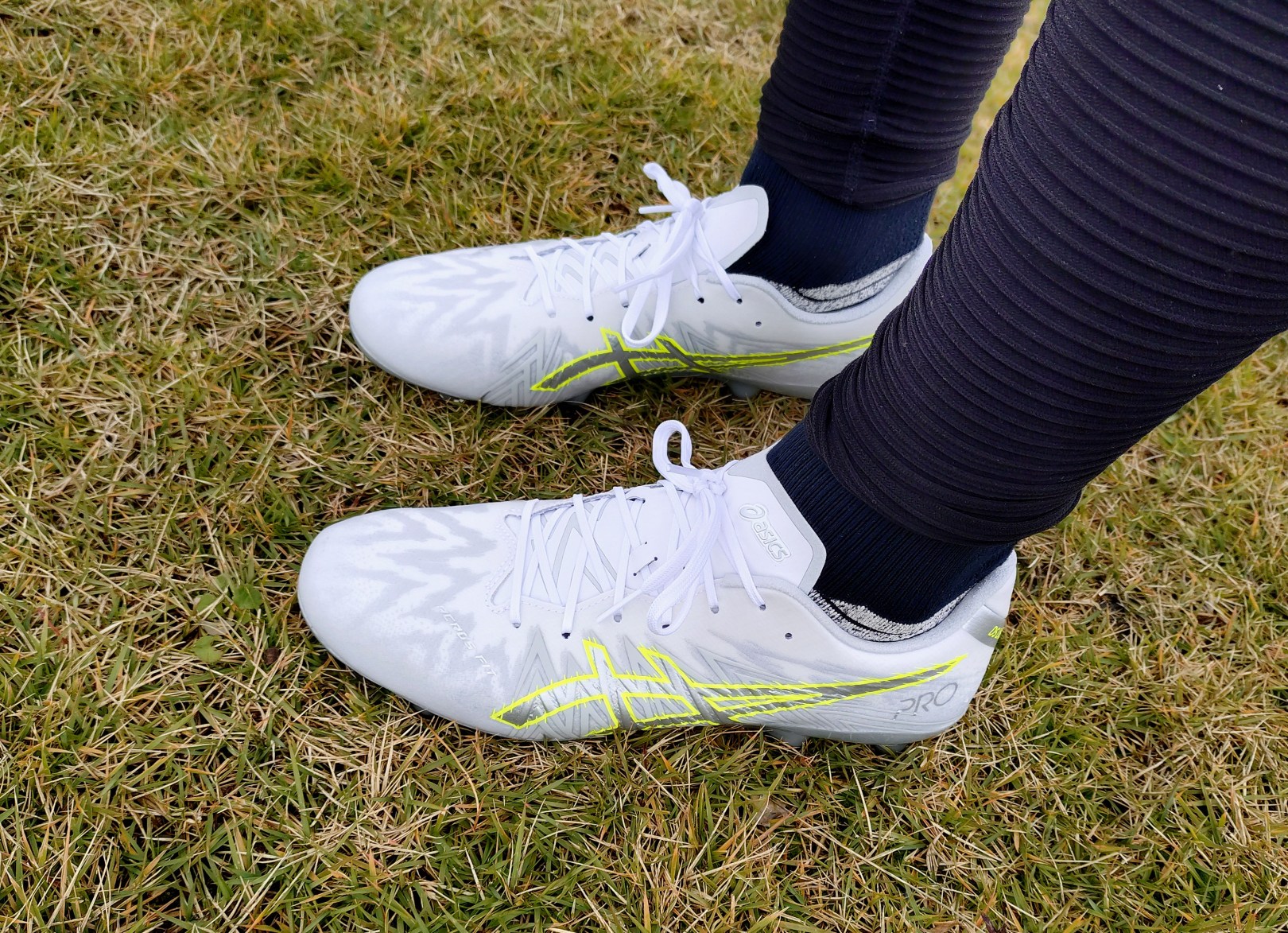
The new meta
With ASICS discontinuing the X Fly Pro 3, one of my personal favourites, I have been searching for a new meta boot (Quick side note: I’ll put together a meta list at some point). While the Jetray Pro and Jetray Elite both have their strengths, neither works for me the way the X Fly Pro 3 did. I loved the Acros Pro 3, and it nearly went into matchday rotation, but the relatively stiffer upper was a bit of a concern, and not something as many people would probably want. I was surprised when I got the ASICS DS Light Acros Pro 4 and the boot felt so soft out of the box. It is shocking to me that very few people on my side of the world have been making a big deal out of these. And after testing, the performance is so good that it is a boot that would be a great choice for a lot of people.
Fit and feel
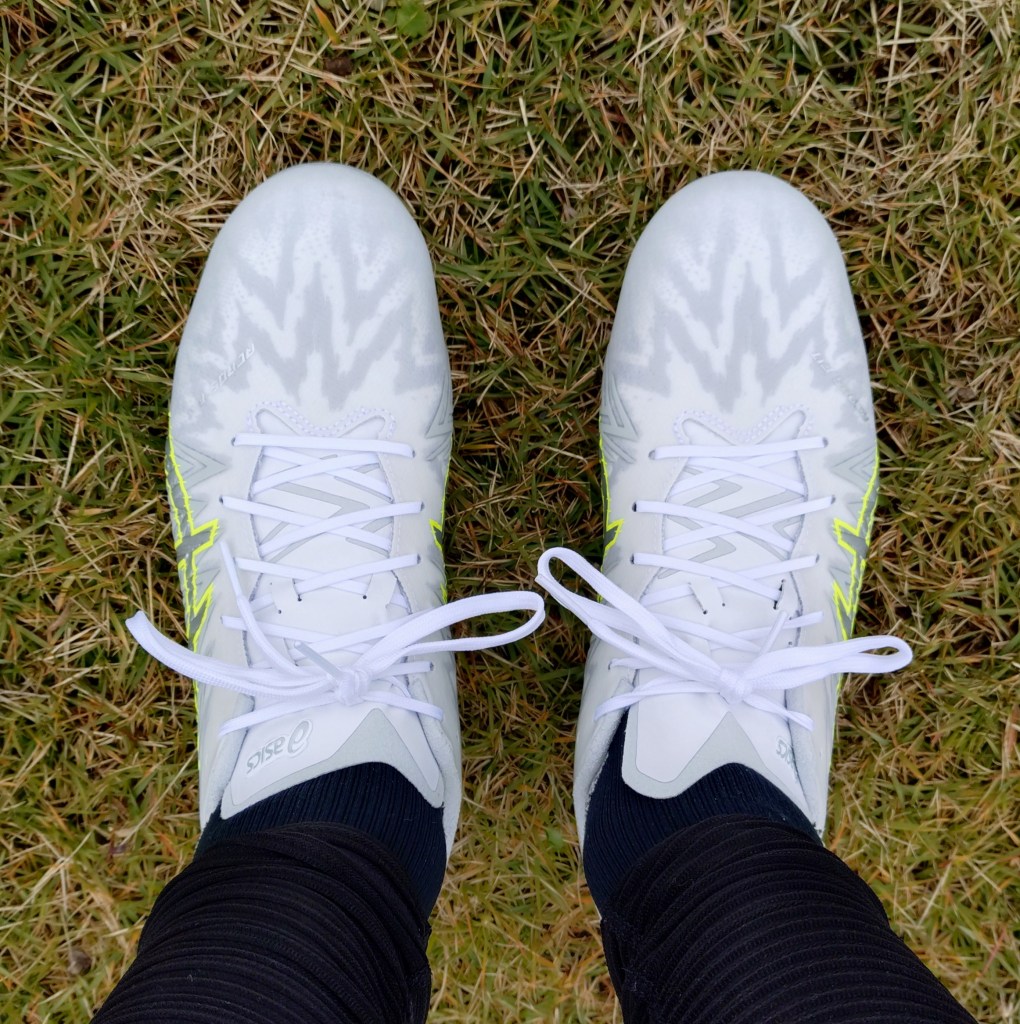
It is impressive how soft and malleable the Acros Pro 4 is out of the box. The spandex mesh material used for the upper is not only soft, but there is even that slight stretch that one expects from a spandex material.
This soft upper is even more impressive given that ASICS has now incorporated part of the Acros fit system into the upper itself. Whereas on previous models the Acros Fit system was only layered on top of the upper, in the DS Light Acros Pro 4 the middle layer of the upper material is now one part of this system, while still having that top layer as well.
This has allowed ASICS to remove the overly raised material on the forefoot, which has allowed them to soften up the forefoot material without sacrificing the stability the series has been known for.
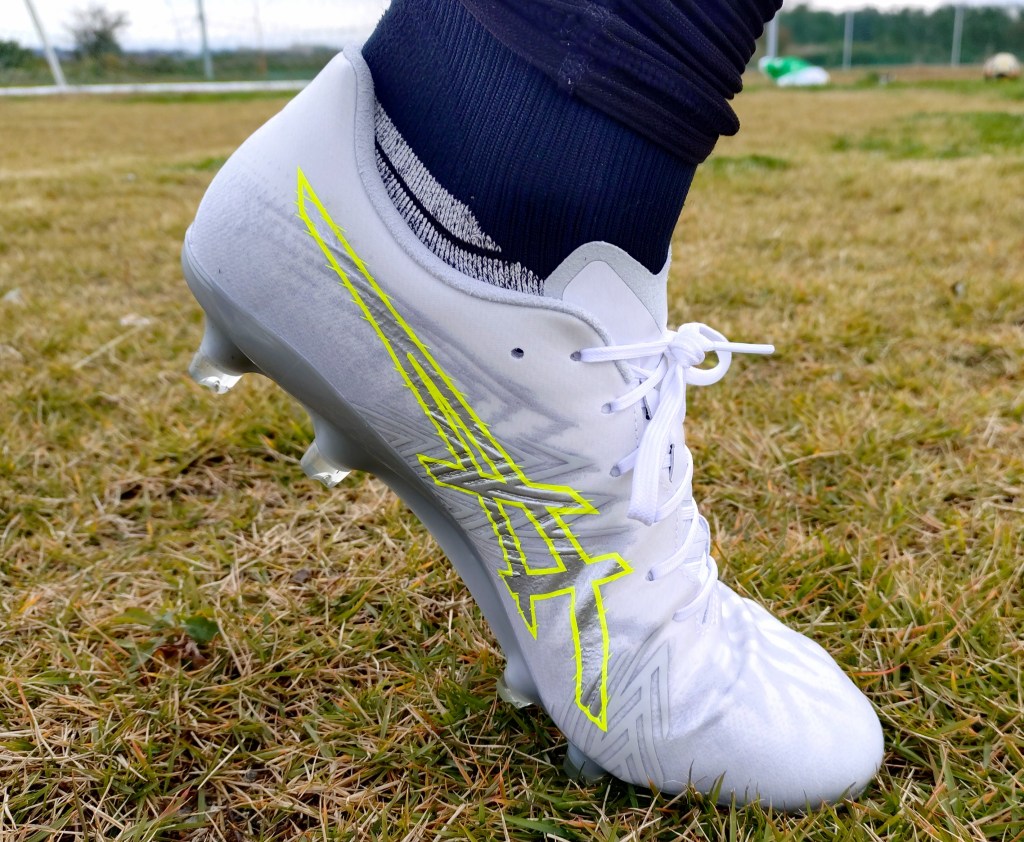
As one would imagine of such a soft upper, it breaks in ridiculously easily. Within half an hour of my first session, the boots felt ready for anything.
And the boot just fits; it wraps nicely around the foot, yet it doesn’t feel too loose or too tight; it just fits. It is impressive how well the boot fits my foot. And because of the central lacing system and floating tongue, as well as the soft and slightly stretchy upper, the boot feels like it will fit most foot types with relative ease.
In spite of how soft the upper is, the Acros Fit system still works really well, and there is a good amount of stability through the midfoot. There is no rollover or spilling, and when running at speed or making hard cuts, the foot feels well locked in.
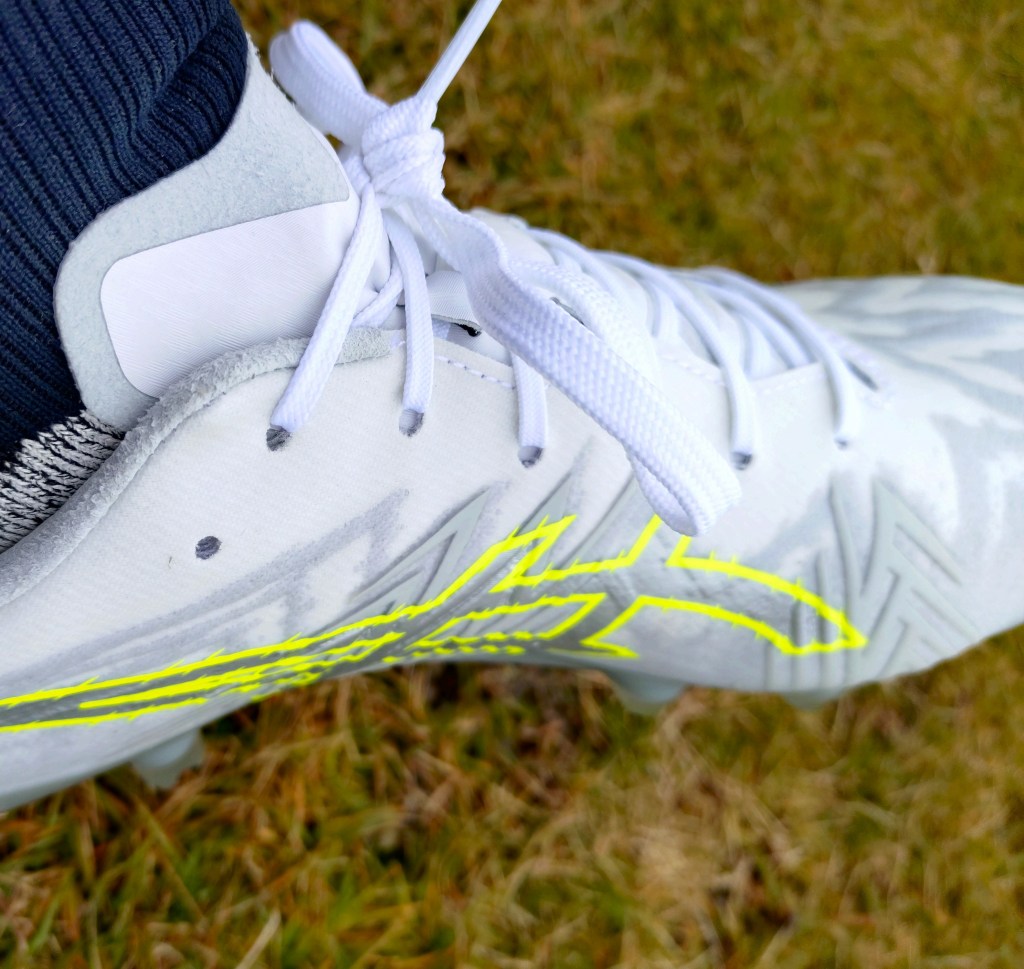
The overall lockdown is good as well. The Acros Fit structure works easily with the central lacing system to deliver what I would say is above average for a speed boot on the current market. As always, ASICS has the extra lacehole for the runner’s knot.
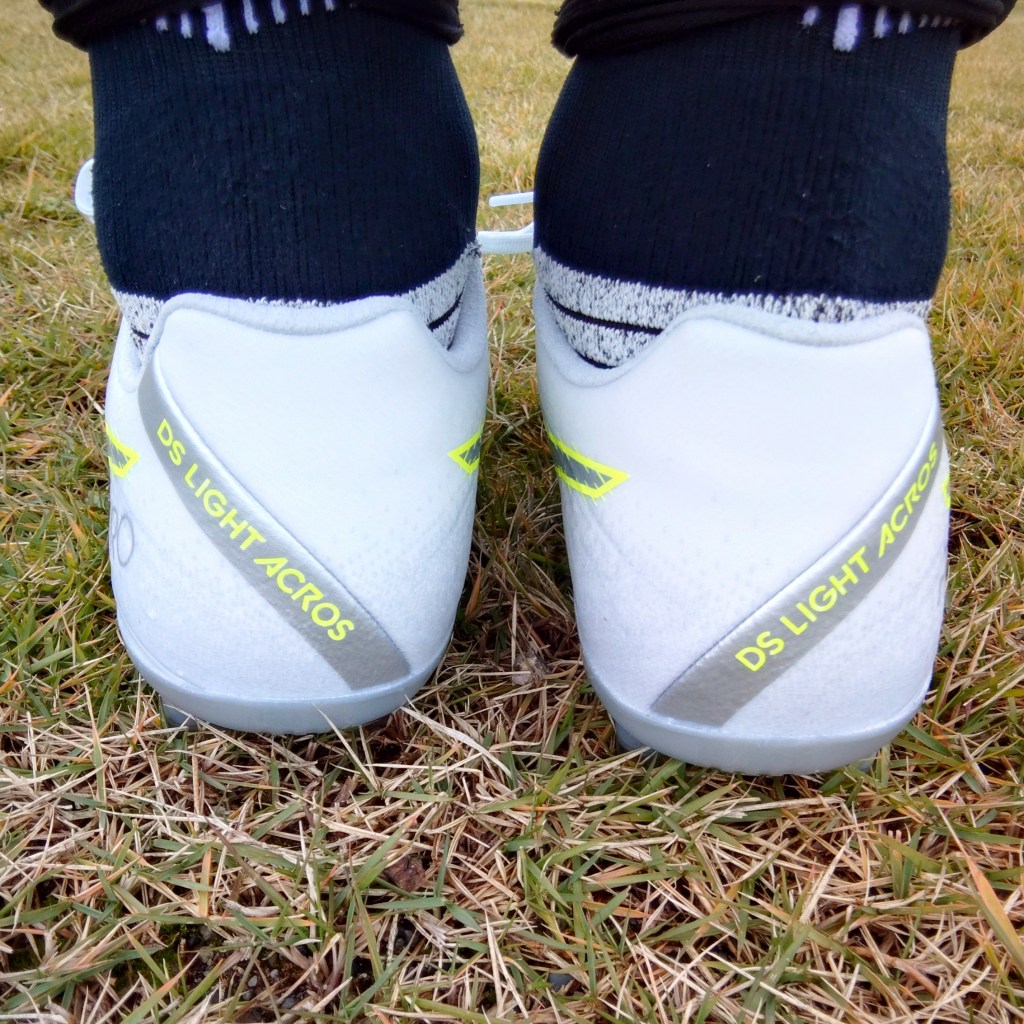
And as per the norm for an ASICS boot, the heel is excellent. It’s deep and comfortable, with some nice cushioning and faux suede lining that not only makes the heel soft but also helps grip the back of the sock.
Another thing that helps with the lockdown is the lining on the inside of the boot. Normally, many brands will add a flat layer of lining on the underside of the upper to make it feel smooth on the foot. ASICS haven’t done this. They left the lining raw, which not only helps grip the sock and thus helps the lockdown, but also keeps the upper thinner.
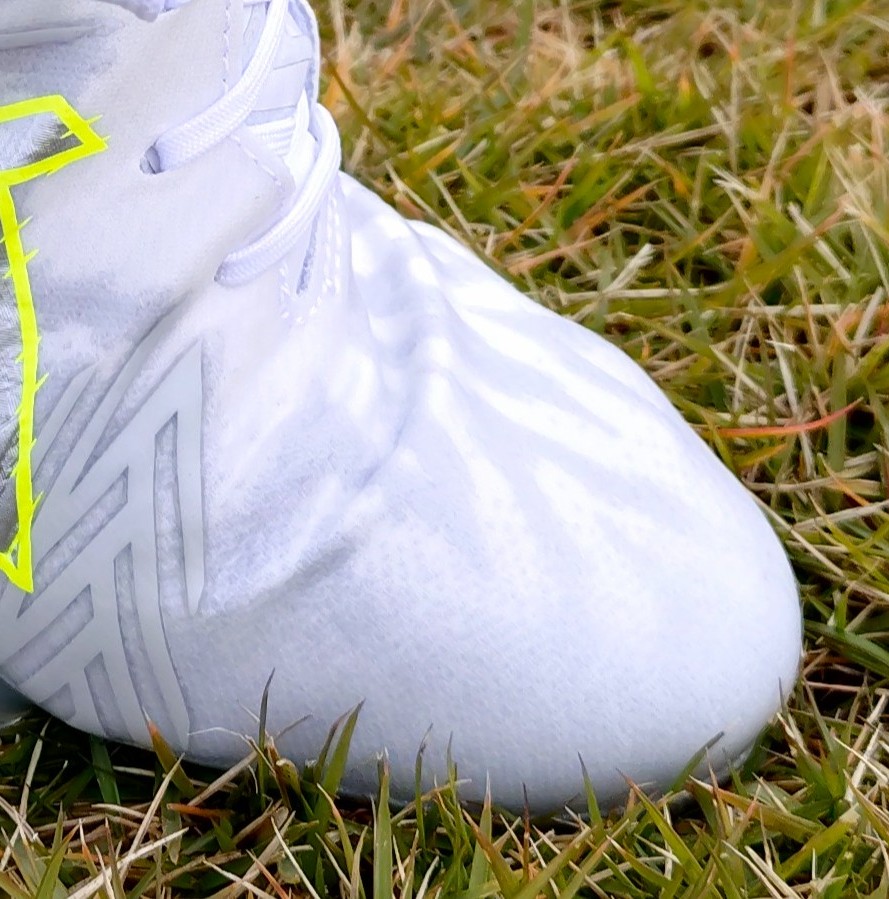
Something else that I appreciate about the upper is that there is some extra reinforcement at the end of the toe, which will help with the durability. And speaking of that, the Acros Pro 4 feels well built, and even as soft as the upper is, these boots can definitely take some beatings.
I also really like the insole ASICS uses for their Elite boots. The backing material is nice, and while the finish on the top of the insole feels a little slick in hand, it grips nicely onto the sock, whether it is a grip sock or not. And in general, the insoles feel of higher quality than a lot of the Elite models on the market.
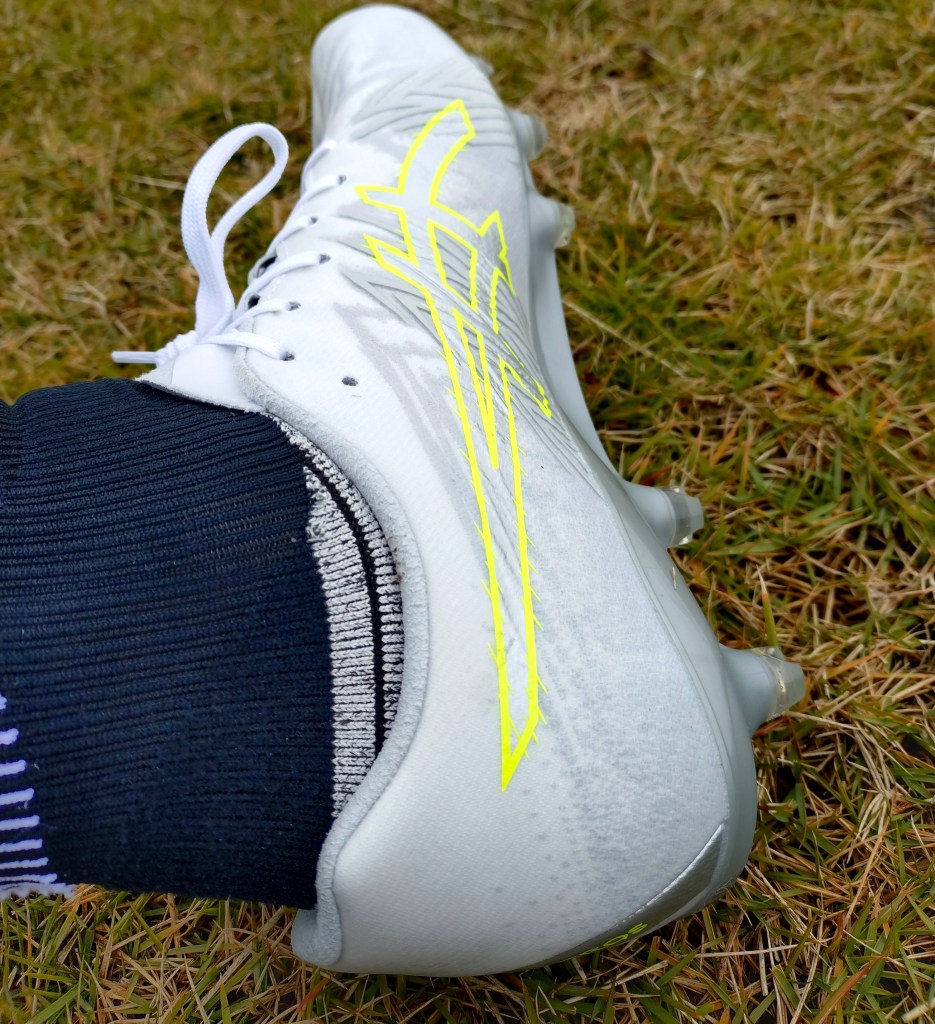
The DS Light Acros Pro 4 is also a really comfortable boot, partially because of how nicely the upper fits, but also because of the insole, and naturally the heel as well. The Acros Pro 4 is one of the most comfortable speed boots on the market, for me.
For the sizing, unlike previous boots in the Acros series that fit more to my normal size, the Acros Pro 4 runs long, so I went a half size down. In the Acros Pro 4, I got a size US 8/UK 7/EU 41.5/26 JP, and the fit is perfect. I recommend getting a half size down if you plan on getting these.
On the ball
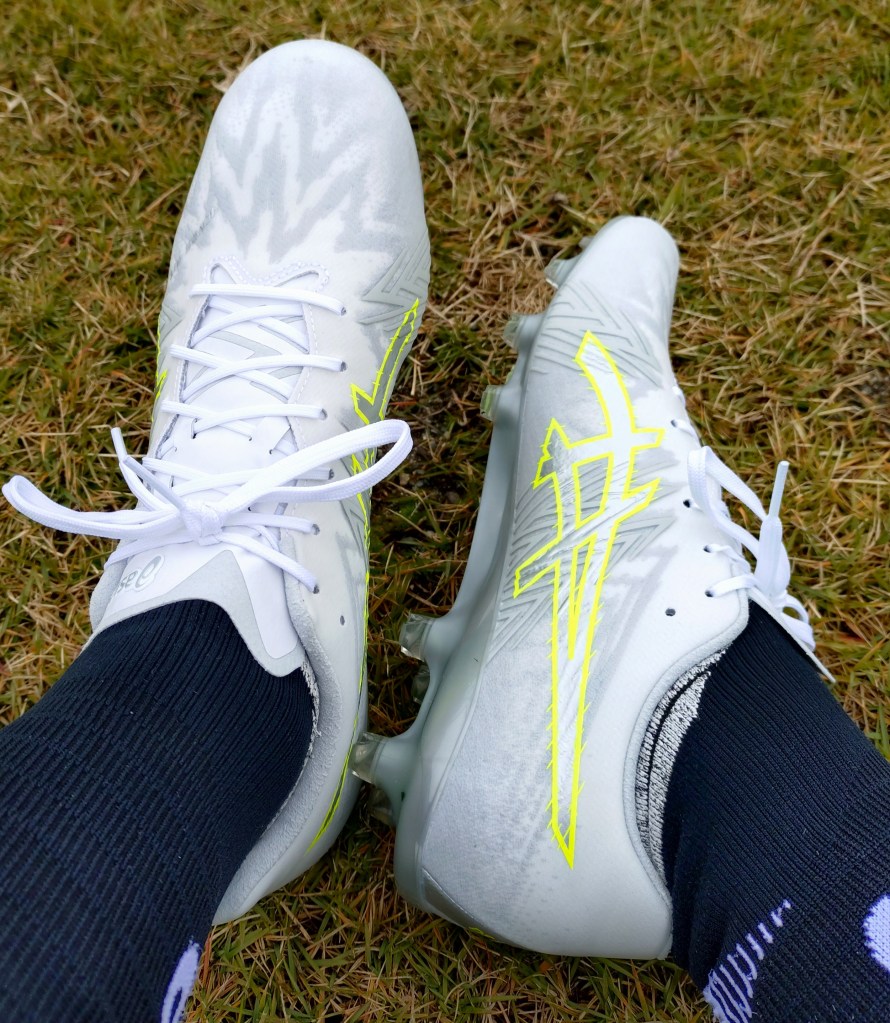
The feel on the ball is another part of the boot where the Acros Pro 4 really shines. The upper is so thin that there is a really raw sensation when manipulating the ball. And yet, because the upper is so soft, there is no plasticky feel to get used to, which I appreciate.
Because the Acros Fit structure is still present on the forefoot, but not on the top layer, there is some 3D texturing across (ha) the boot that adds a little bit extra in adverse conditions. The upper has a matte finish overall, so while there is not as much grip as some other speed boots, it isn’t slick, either.
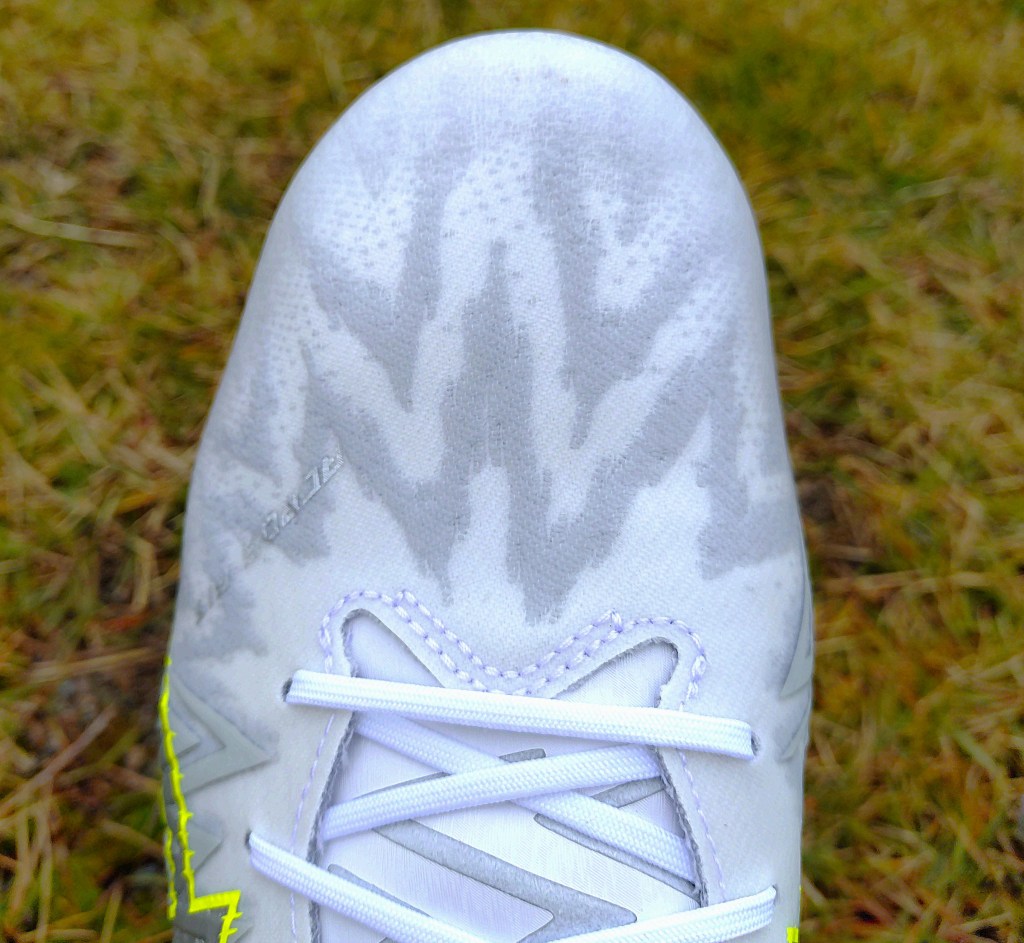
Additionally, the boots feel fantastic to strike a ball in. Since the upper is so soft, there is no real pingy feeling when hitting the ball with power, but there is excellent and direct feedback when doing so. I find it particularly enjoyable to drive or volley the ball while wearing the Acros Pro 4, and in my opinion, it is the most satisfying ASICS boot I’ve ever tested in this regard.
I also appreciate that ASICS made the forefoot as uniform as possible in terms of the placement of the Acros Fit system. And when combined with the thin upper, dribbling in the boots is a focused and enjoyable feeling.
Grip
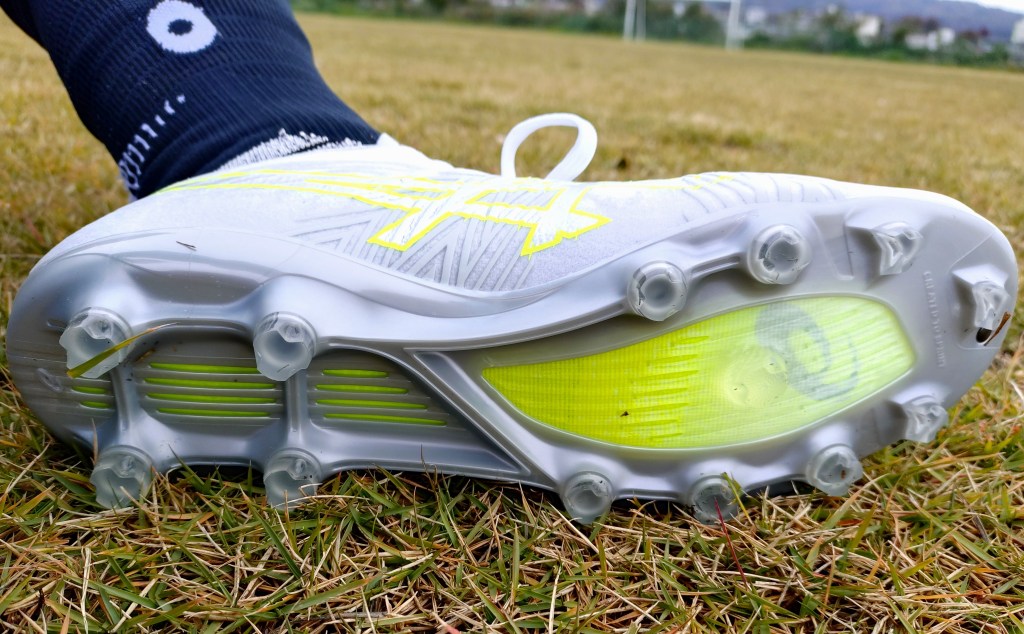
What is really interesting about the outsole is that while it is the same outsole that was used on the X Fly Pro 3, it feels like ASICS made some slight changes to the materials used on the outsole. I say this because I find that the snapback is stronger on the Acros Pro 4 when compared to the X Fly Pro 3. Judging the outsole visually, it shouldn’t be different, and yet it feels like it’s been upgraded.
And something that I know BootWizard and some others will appreciate is that even though there is great snapback in the outsole, there is still a nice flex point between the first row and second row of studs. This means the soleplate still flexes naturally with the foot.
Despite the stud shape, the outsole has good grip, yet maintains some nice pivoting power, and I never feel like it’ll get stuck in the ground. The soleplate is multifunctional as well. It’s great on FG, HG, and the nicer AG surfaces, specifically the 4G variety with the taller synthetic grass. It won’t be great on the older, shorter surfaces. I recommend something like the Scudetta Biotouch AG for surfaces like that instead.
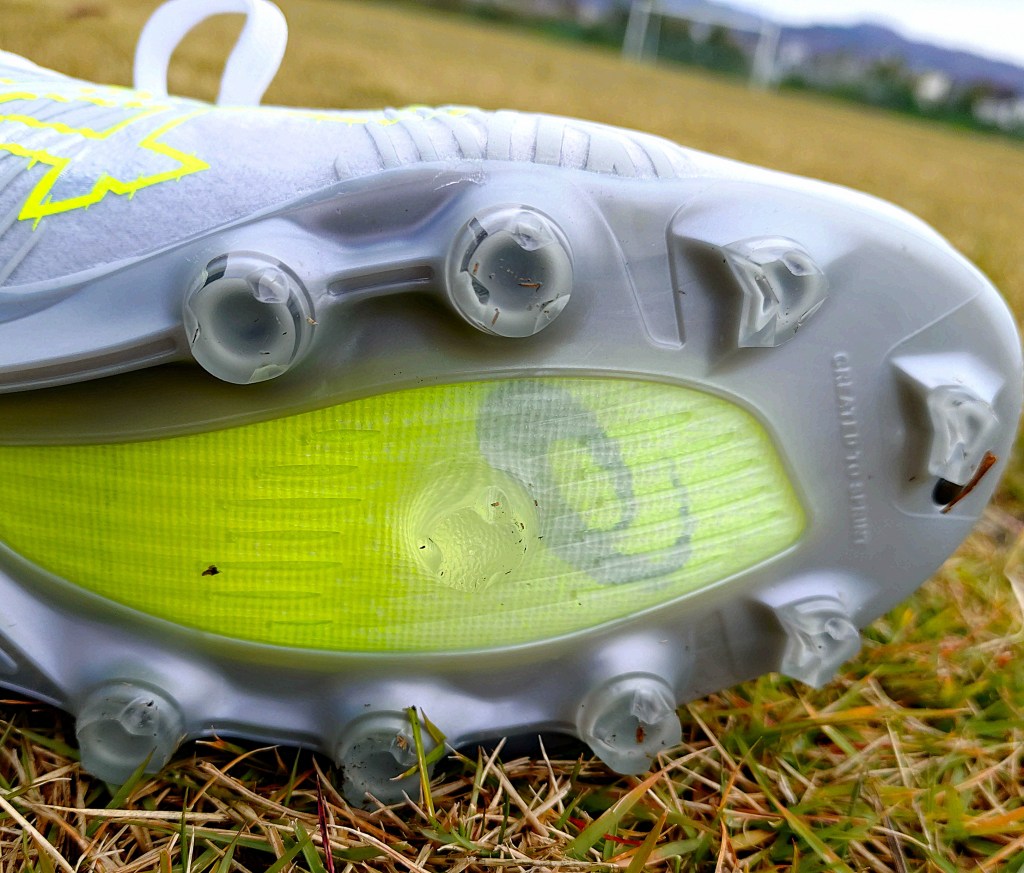
One of the pitches I use for testing is in bad shape and has lots of divots and uneven surfaces, yet even on that surface I don’t feel any stud pressure and the outsole feels as balanced as possible on a surface like that. That is to say, the boots have a comfortable ride.
In fact, the only negative I have about the soleplate is that there is no texturing on the bottom of the studs to roll around as easily, but that’s a very personal gripe.
It’s a great outsole, though.
DS Light Acros Pro 4 versus the DS Light X Fly Pro 3 Comparison

As mentioned before, the X Fly Pro 3 was my main “meta” boot for some time, which basically meant it was the boot I recommended to almost anyone who wanted a high-performing boot that was mostly no-nonsense.
Since those are now discontinued, though they can still be readily found, it’s always easiest to find the newest product. For some people, they might still prefer the X Fly Pro 3, especially as it has a more cushioned touch on the ball.
On the other hand, given how many boots have a thin upper, and how popular that type of boot tends to be, maybe people will find themselves more at home in the Acros Pro 4.

And the thinner versus thicker touch on the ball is probably the deciding factor for many people. The Acros Pro 4 does have better lockdown, stability, and a snappier soleplate. So, there is that to think of as well. But the biggest difference is the feeling on the ball.
Personally, I would say the performance profile of the Acros Pro 4 is better than the X Fly Pro 3, but while I hate to sit on the fence, I still like both. There is a time and place for either boot. It’s just down to what you look for in a boot.
Easy Recommendation
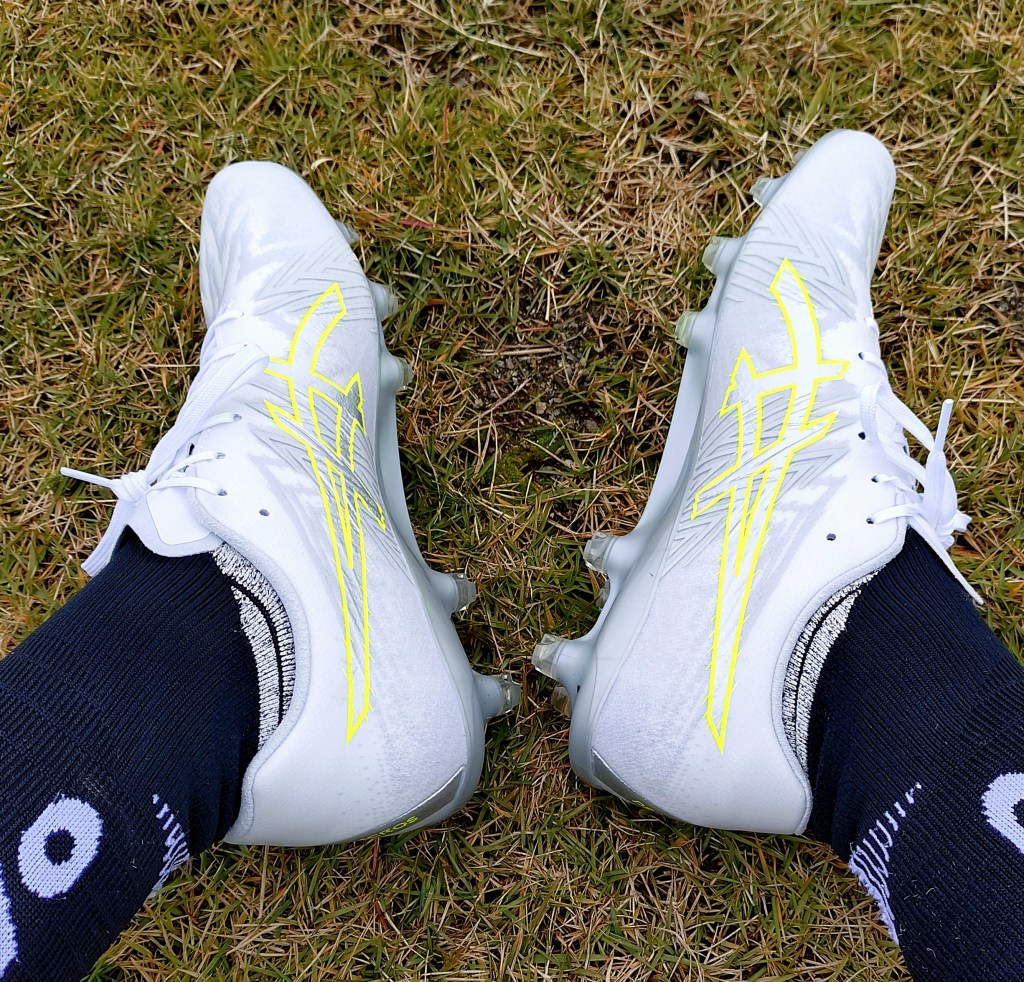
It doesn’t seem like ASICS even expected the Acros Pro 4 to turn out as well as it did, given the lack of marketing. Despite that, for me, it’s the best boot ASICS has released this year. The excellent, thin, and soft upper, as well as the reactive yet balanced soleplate, means that it’s a boot I can easily recommend to people wanting something relatively no-nonsense. The shaping of the boot is also adaptable enough so that it will fit various foot types with relative ease. It is also a really comfortable boot.
We also can’t discount the enjoyment factor. The boots are fun to strike a ball with, with the supple upper being thin enough to offer great feedback when hitting the ball with power. Additionally, the solid lockdown means that the foot stays locked in place when doing so. I didn’t expect to enjoy the ASICS DS Light Acros Pro 4 so much, but now I’m wondering how to make sure it’s always in my matchday bag. It’s brilliant.
What do you think of the ASICS DS Light Acros Pro 4? Please share this with your friends and make sure to follow me on Instagram!
Also, check out the Football Boot Hour Podcast I co-host with Boot Wizard!
If you like this review, please consider supporting me by buying me a Ko-Fi or making a donation through the Support The Blog sidebar!
I wear HAVO Grip Socks for training and matches.
Use code LOCKHART15 to get 15% off your HAVO Grip Sock order or click the link here: https://havosports.com/LOCKHART.
じゃあね!


